Concept Project
6 min read
In a month-long class project with a team of 1 Project Manager, 2 UX Researchers and 2 Motion Designers, I led the user experience and interaction design for a progress tracking feature that helps climbers reflect on and learn from past attempts, supporting long-term engagement and retention.
CONTEXT
KAYA is a bouldering app that helps climbers discover and navigate to outdoor boulders and indoor gym climbs.
Bouldering is typically done in groups for safety.
Climbers spot each other, take turns attempting the same climb, and share advice during a climbing session.
Finding the right climb is part of the challenge.
Outdoor boulders are scattered across areas with no signs or clear paths. Climbers need help locating the right rock and understanding its difficulty.
This is where KAYA is most commonly used.
The app helps climbers find boulders, get directions, and see how others approached the climb before trying it themselves.
PROBLEM
KAYA was primarily used for navigation, leading to high churn once that need was fulfilled.
Problem 1 | Secondary Data
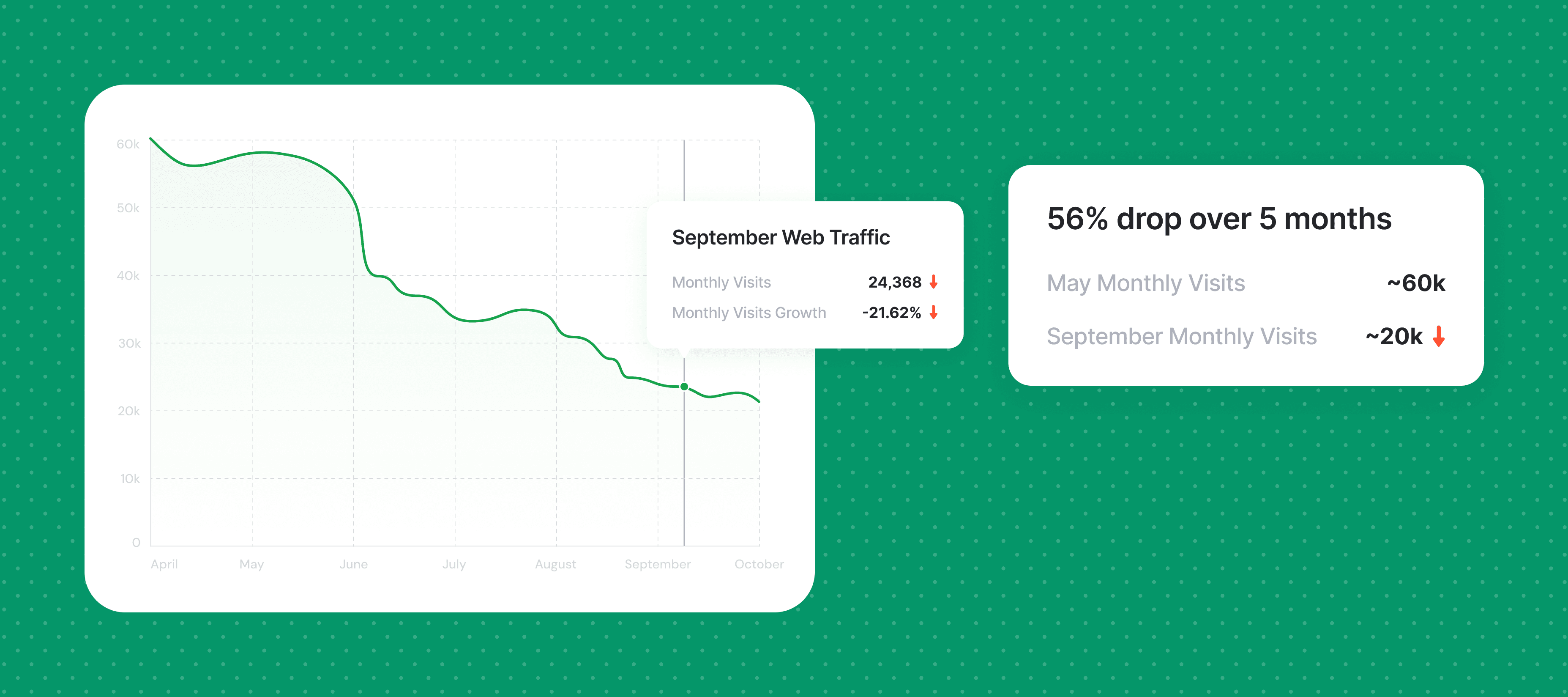
Analytics show that there is a 56% drop of users over 6 months.
Problem 2 | User Interviews
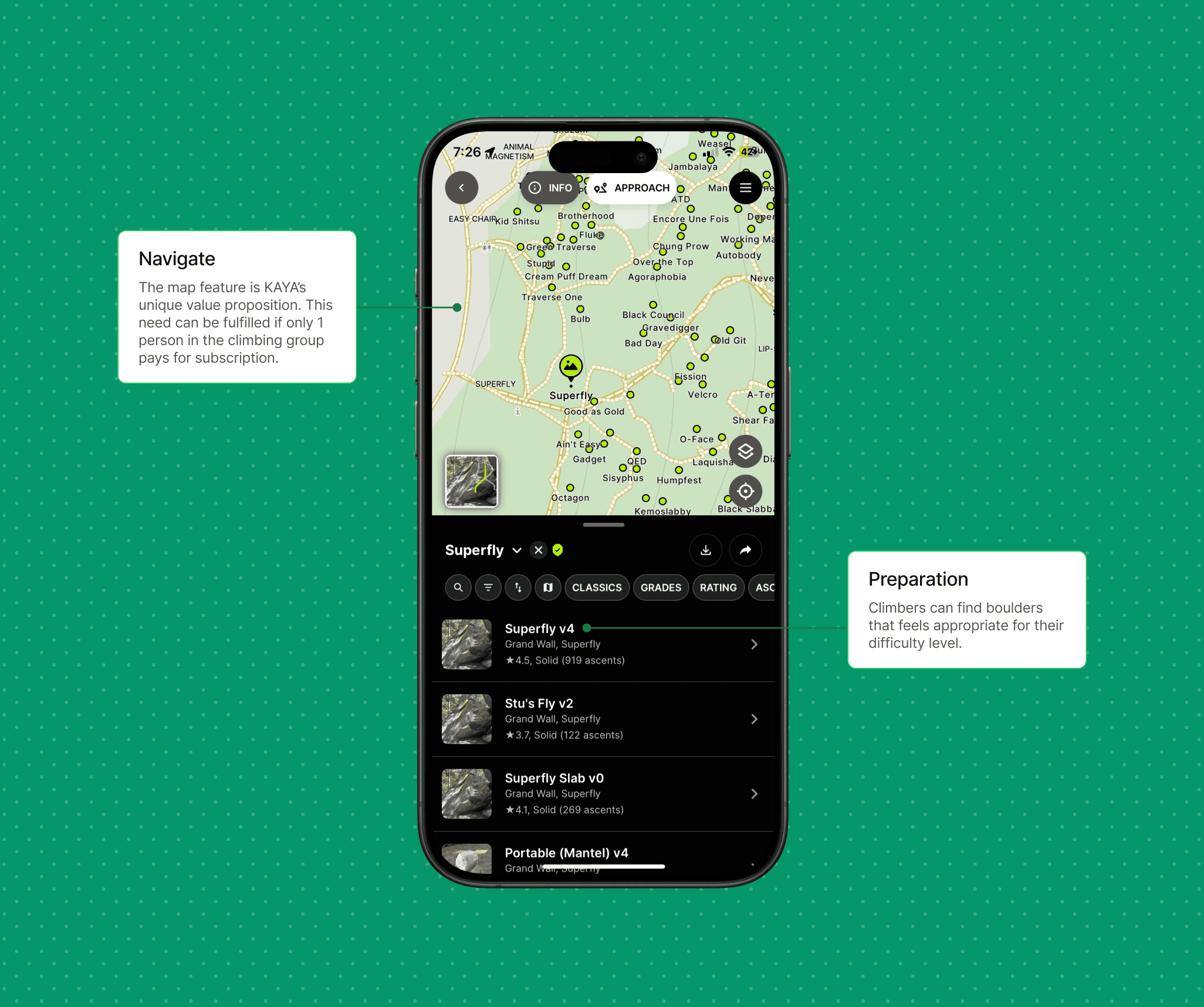
KAYA is primarily seen as a navigation tool, with limited value beyond that use case. As a result, in group climbing, only one person subscribes to KAYA.
With KAYA I unsubscribe a lot. I have this one guy in our friend group who pays for the subscription, so I just have him navigate. If he’s not there and I really want to boulder outside, then I’ll pay for the subscription again. Otherwise, I just climb in the gym.

Anonymous Outdoor Boulderer
Problem 3 | User Interviews
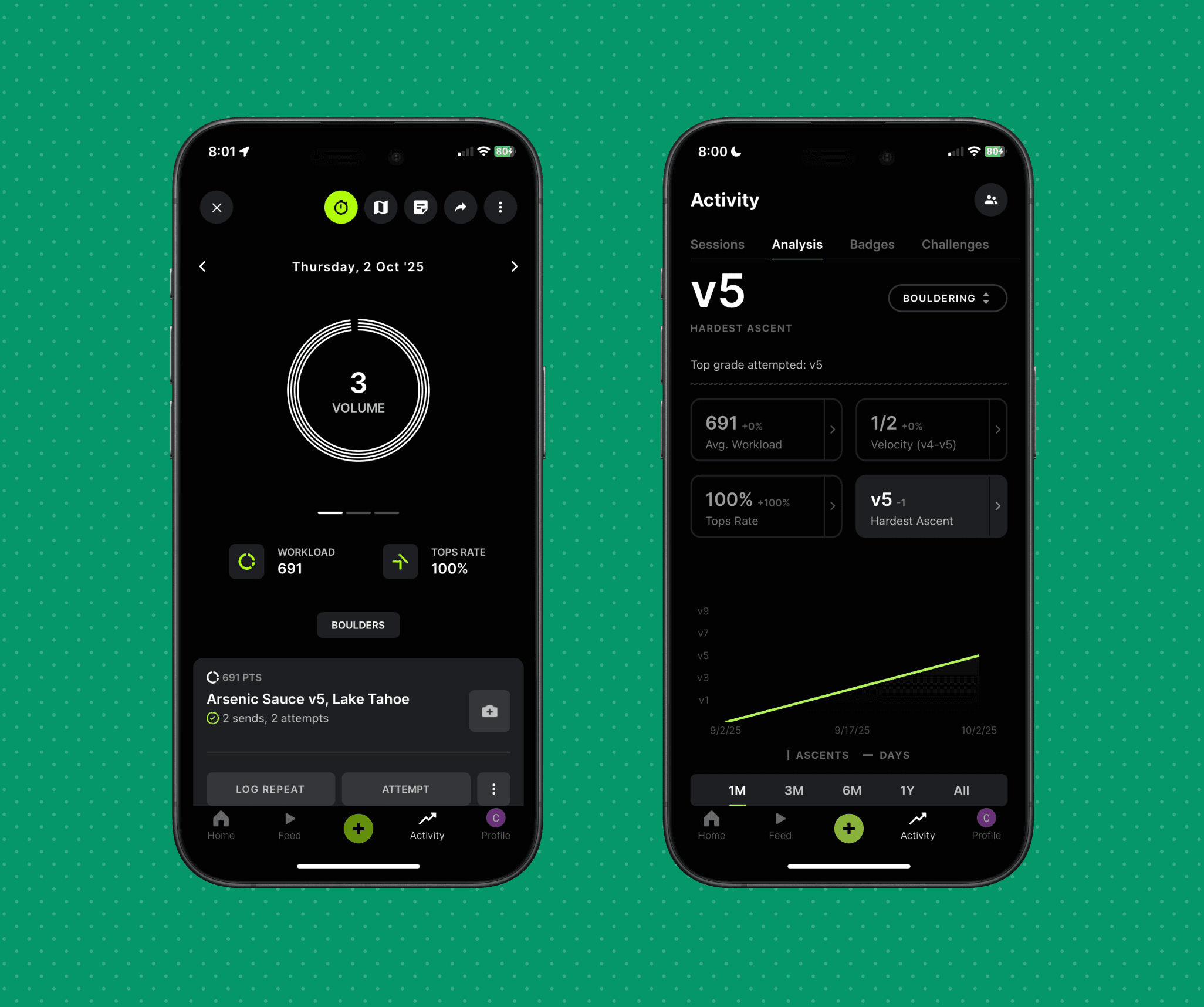
KAYA’s tracking system uses quantitative metrics which aren’t perceived as valuable for users.
It gives you, like, kind of useless, bogus information of like random statistics that I don't think... it doesn't provides anything useful...this analysis page is useless for me. [For example] it just tells you how many [climb] attempts... who cares if it took me 10 times or less attempts [to solve that boulder problem] that day? It's not useful.

Anonymous Outdoor Boulderer
Problem 4 | Ethnography Observation
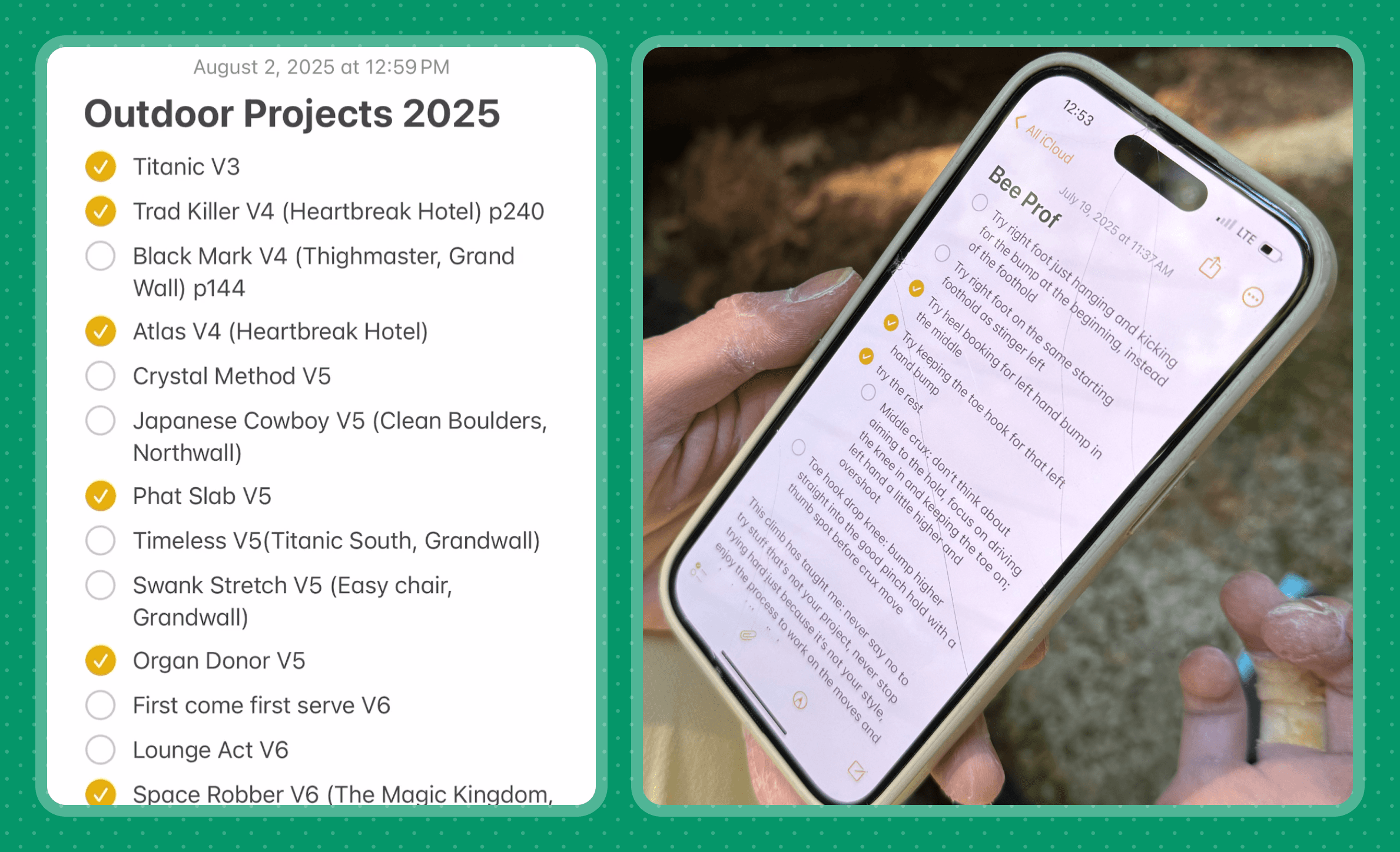
Research revealed unmet needs for qualitative progress tracking, with climbers relying on notes apps, personal videos, or Instagram to reflect on their progress.
THE PROBLEM
The quantitative progress tracking feature in KAYA does not support outdoor boulderers in memorizing, recalling or visualizing past climbing attempts.
DESIGN CHALLENGE
How might we help outdoor boulderers retain and reflect on their climb attempts to build confidence and improve over time?
IDEATION
Exploring Concepts Across the Climber Journey
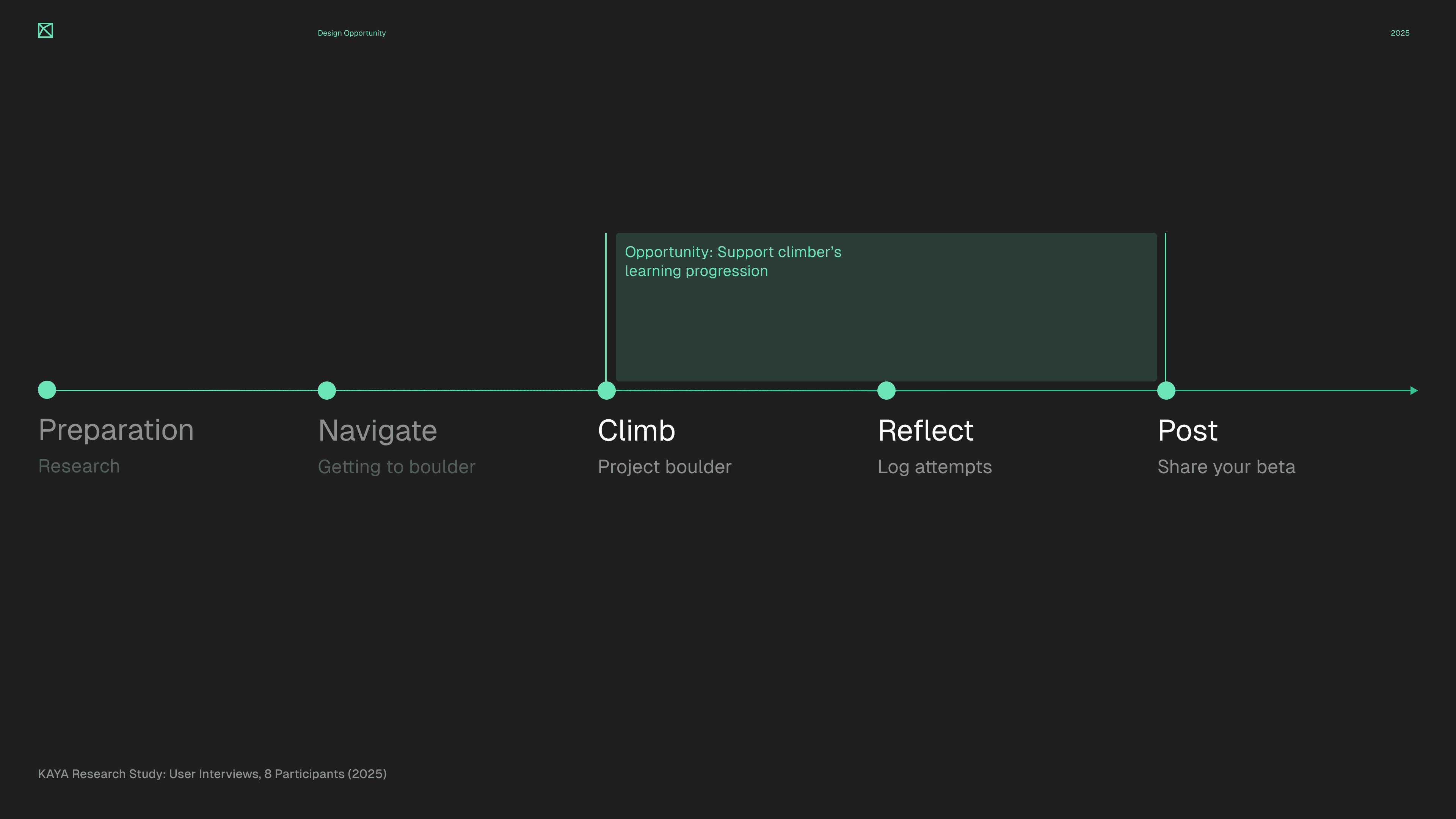
We explored three ideas during ideation, but when we mapped them to each stage of the climber journey, most ideas only addressed a single step rather than the full experience. One concept stood out by supporting multiple stages of the journey, especially climbing, reflection, and progression where user needs were unmet.
SOLUTION
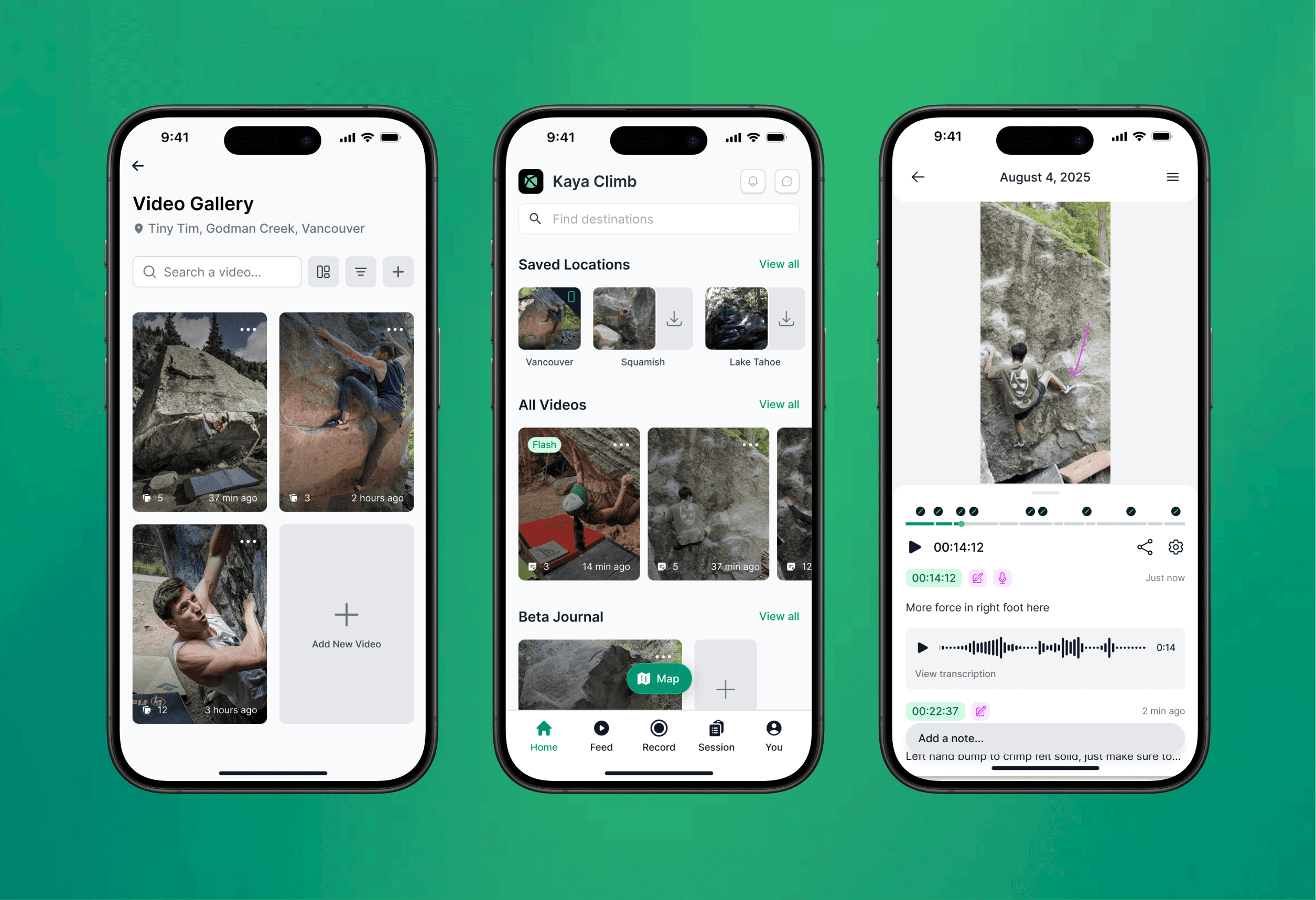
The Climbing Journal is a feature within the KAYA mobile app that supports climbers during and after a climbing session.
I designed around the realities of group climbing, where climbers take turns attempting climbs and rest between efforts. During these breaks, climbers can record their climb attempts and jot down reflections directly in the app, then review everything after the session. The feature addresses the lack of motivation to use the app after navigation is complete and supports continued use over time.
INTRODUCING
The Climbing Journal


Celine sent a message.
1m
Jim the outdoor boulderer will be guiding us through how the new feature can be used!
VIDEO GALLERY
Jim arrives at the boulder and wants to start recording their climbs.
I designed a video gallery that automatically saves video recordings to the app’s cloud server. Using computer vision, the gallery detects individual climb attempts within long recordings and organizes them into section. Additionally, users can tag each video with the name of the boulder and log its status.
ANNOTATE ON VIDEOS
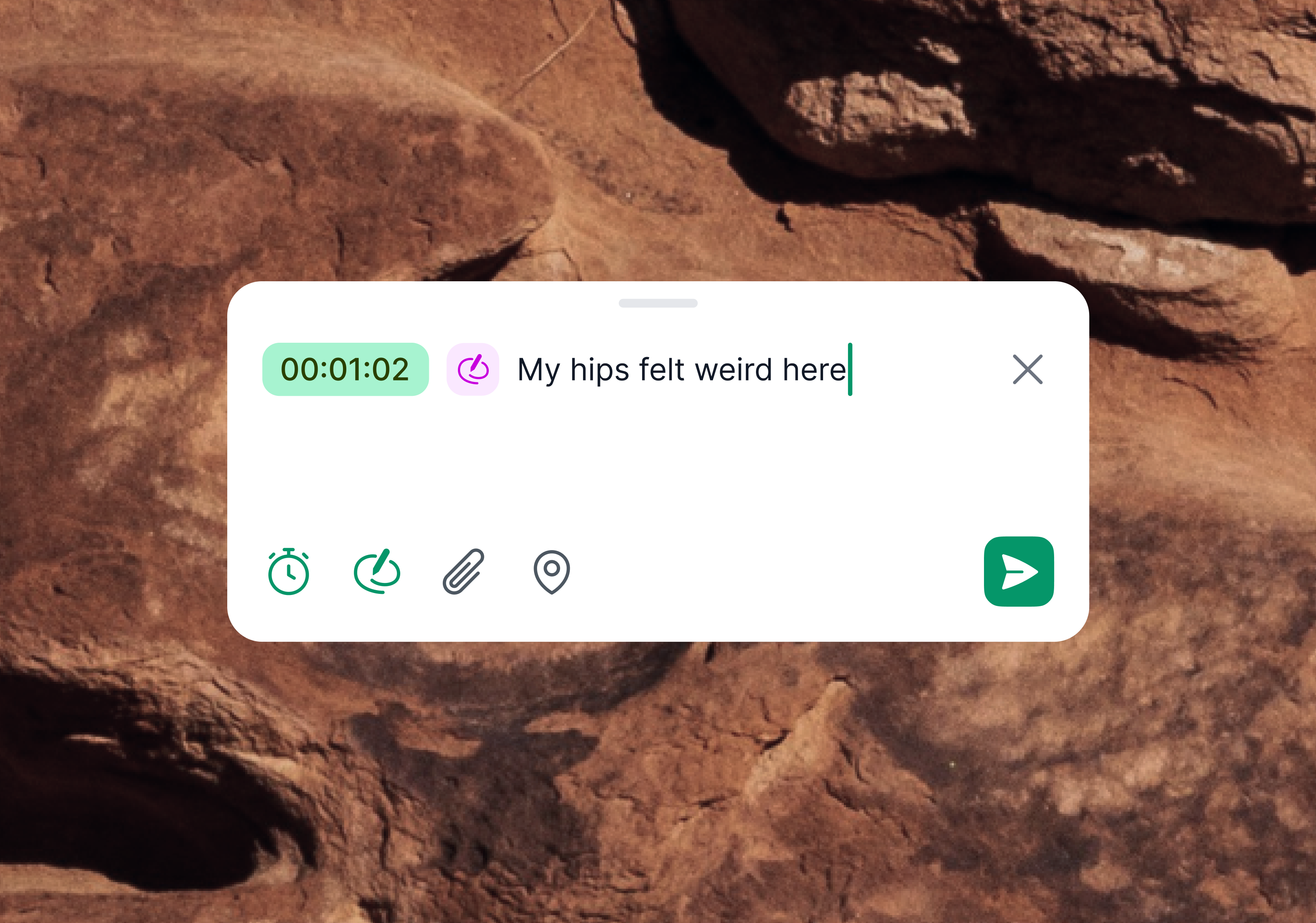
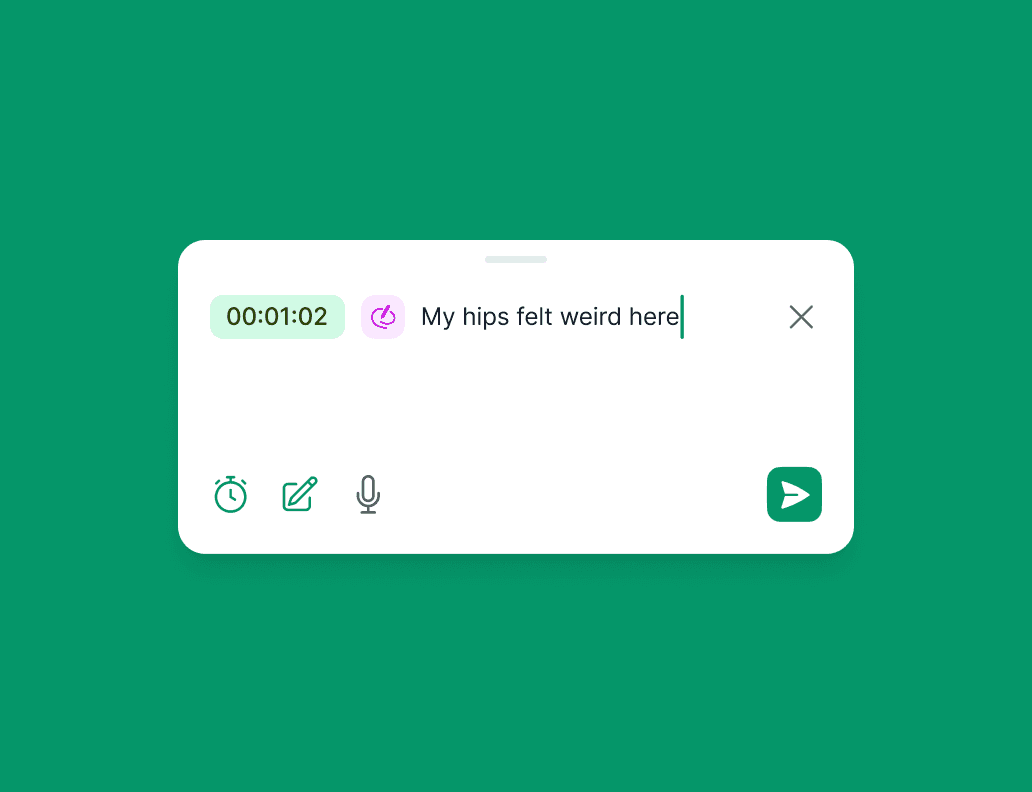
After finishing a climb, Jim starts taking notes to specific timestamps in their videos.
By linking notes directly to moments within a climb, users can quickly recall where they struggled or what to adjust without scrubbing through footage or cross-referencing separate notes apps. This keeps reflection contextual, efficient, and connected to the actual attempt.
SESSIONS PAGE
During break, Jim organizes their climb videos in a day’s session.
KAYA automatically organizes recorded videos by date and time and groups all climbs from the same day into a single session. I also leveraged the Zeigarnik effect by frontloading untagged climbs on the interface to encourage climbers to tag their videos while the context of their session is still fresh. I also structured the videos around sessions so users can review all their attempts from a day in one place.
Driving Insight
Because reaching a climbing area often requires significant travel and effort, climbers usually spend an entire day attempting multiple boulders in the same location. In KAYA, this full day of climbing is captured as a single session. I kept the label "session" as it matched the users mental models effectively during prototype testing.
NOTES & REFLECTION
After a long day, Jim reflects on his session.
While timestamped notes are useful for specific moments in a climb, research showed that climbers also want a simple way to summarize what they learned across the entire day. Thus, I added an optional open-ended text field for reflection and notes so they can look back later and understand their progress over time through high level takeaways and reflection.
IMPACT
Value propositions encompasses both user and business impact.
User Impact | 1
Helps climbers easily recall and review past attempts
User Impact | 2
Centralized space for reflecting climbs

User Impact | 2
Supports motivation and long-term progression

Business Value | 1
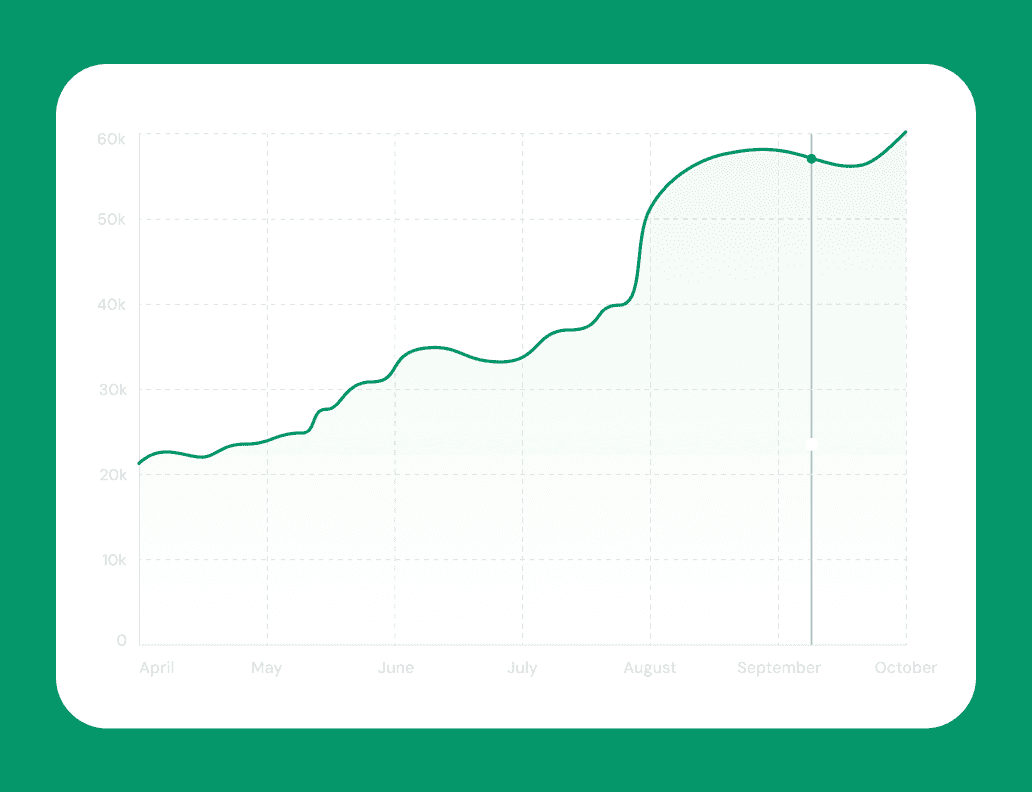
Increase retention and engagement
Business Value | 2
Differentiates KAYA from competitors

Business Value | 3
Supports subscription growth and scalability

RETROSPECTIVE
Final reflections and learnings.
Exploring outside of Figma to prototype complex interactions for contextual inquiry
During our pilot session, I realized that Figma was very limited in supporting the complex, state-based interactions we needed to test. To ensure our contextual inquiry sessions reflected real-world use, I explored alternative prototyping tools like Lovable to build fully functional prototypes that allowed participants to interact with the product in their actual environment.
Low adoption often comes from misalignment with existing behavior or needs.
Although KAYA offered progress tracking, users avoided it in favor of competitor apps because the tracking relied on quantitative metrics that didn’t support their need. I’m grateful to the UXR team for uncovering this need through field studies, as it revealed insights that wouldn’t have surfaced through traditional research methods alone.