Reusables

Reusables

Case Study

7 min read

Reusables is a sustainable packaging initiative that offers reusable containers to reduce single-use waste in campus cafeterias. However, the program requires extra steps which leads many first-time users to perceive it as inconvenient. To address this, we designed a Smart Vending Machine that dispenses food in Reusables containers and guides first-time users through the registration and return process.
Role

Role

Product Design Lead, UX Research,
UX/UI Design, Design Systems,
Visual & Service Design, Illustration

Product Design Lead, UX Research, UX/UI Design, Design Systems, Visual Design, Illustration

Timeline

Timeline

January - April 2024 (4 Month)

January - April 2024 (4 Month)

Course

Course

IAT 333 - Interaction Design

IAT 333 - Interaction Design

Team

Team

Alison Lu (UX Researcher & Writer)
Christina Raganit (3D Artist & Designer)
Kasey Le (UX Researcher & Writer)

Alison Lu (UX Researcher & Writer)
Christina Raganit (3D Artist & Designer)
Kasey Le (UX Researcher & Writer)

My Responsibilities

✒️

Created user flows and high-fidelity mock-ups, and established design systems for prototyping.

🦜

Facilitated user interviews, design ethnography, journey mapping, and participatory workshop.

🎨

Designed container labels and the vending machine blueprint, ensuring accessibility for all users.

✍️

Led visual design efforts and created vector and human illustrations using Figma and Adobe Illustrator.

BACKGROUND

Who is Reusables?

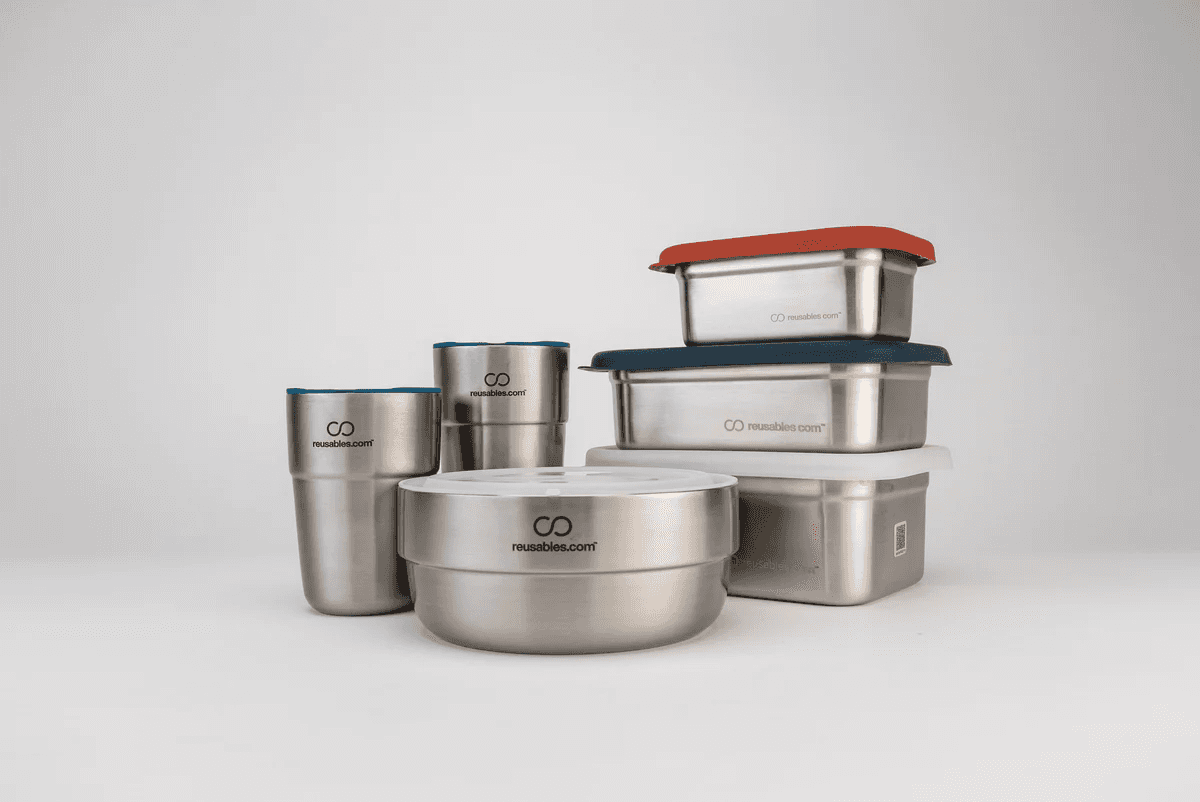
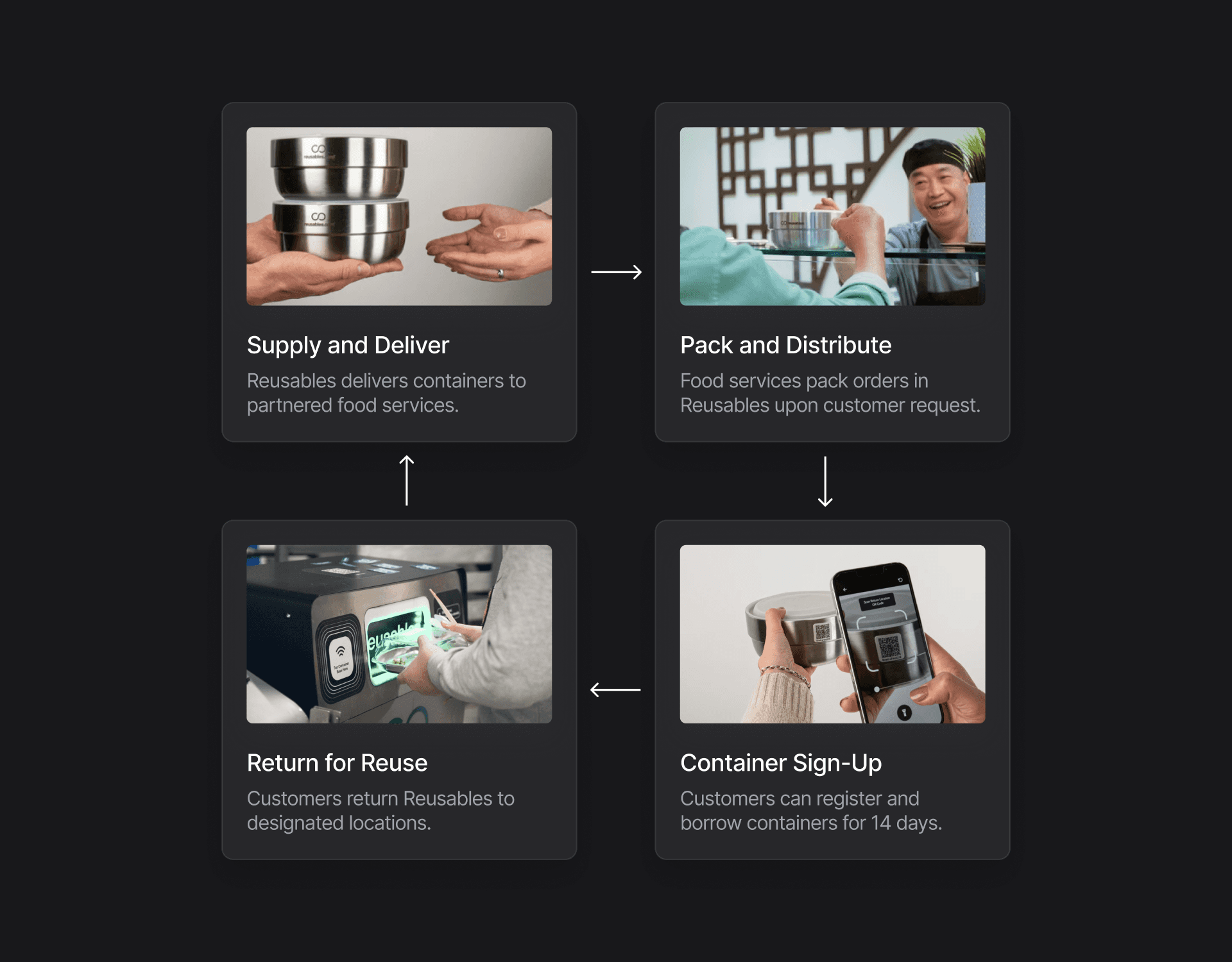
Reusables is a container-borrowing service that operates in campuses and restaurants. Their supply food services with reusable containers to reduce the use of single-use packaging waste.
THE PROBLEM

New users find the borrowing process inconvenient, which discourages them from participating in the program.

New users find the borrowing process inconvenient, which discourages them from participating in the program.

INTRODUCING

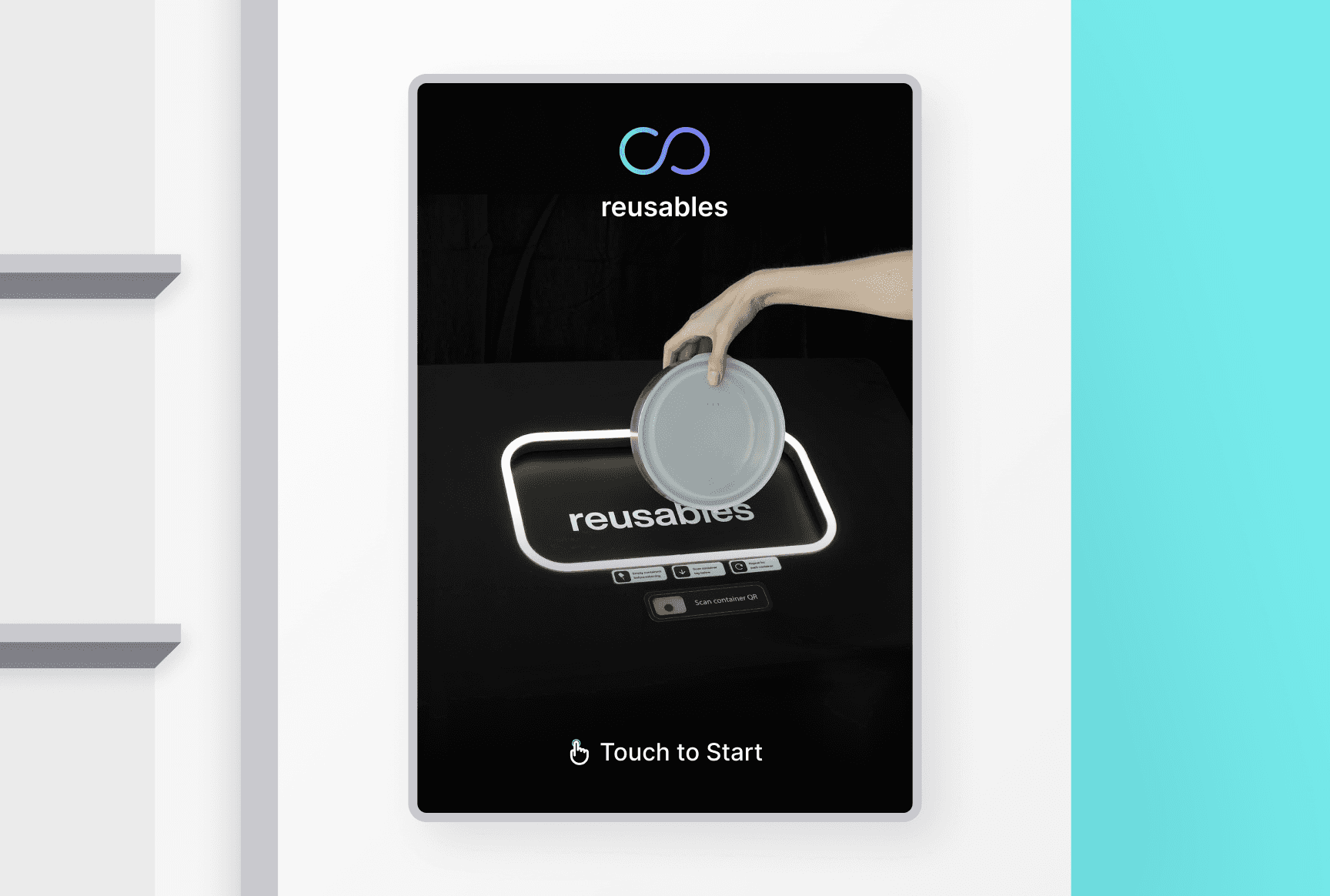
The Reusables Vending Machine
VENDING MACHINE

Informing the pre-ordering experience.
Pain Point

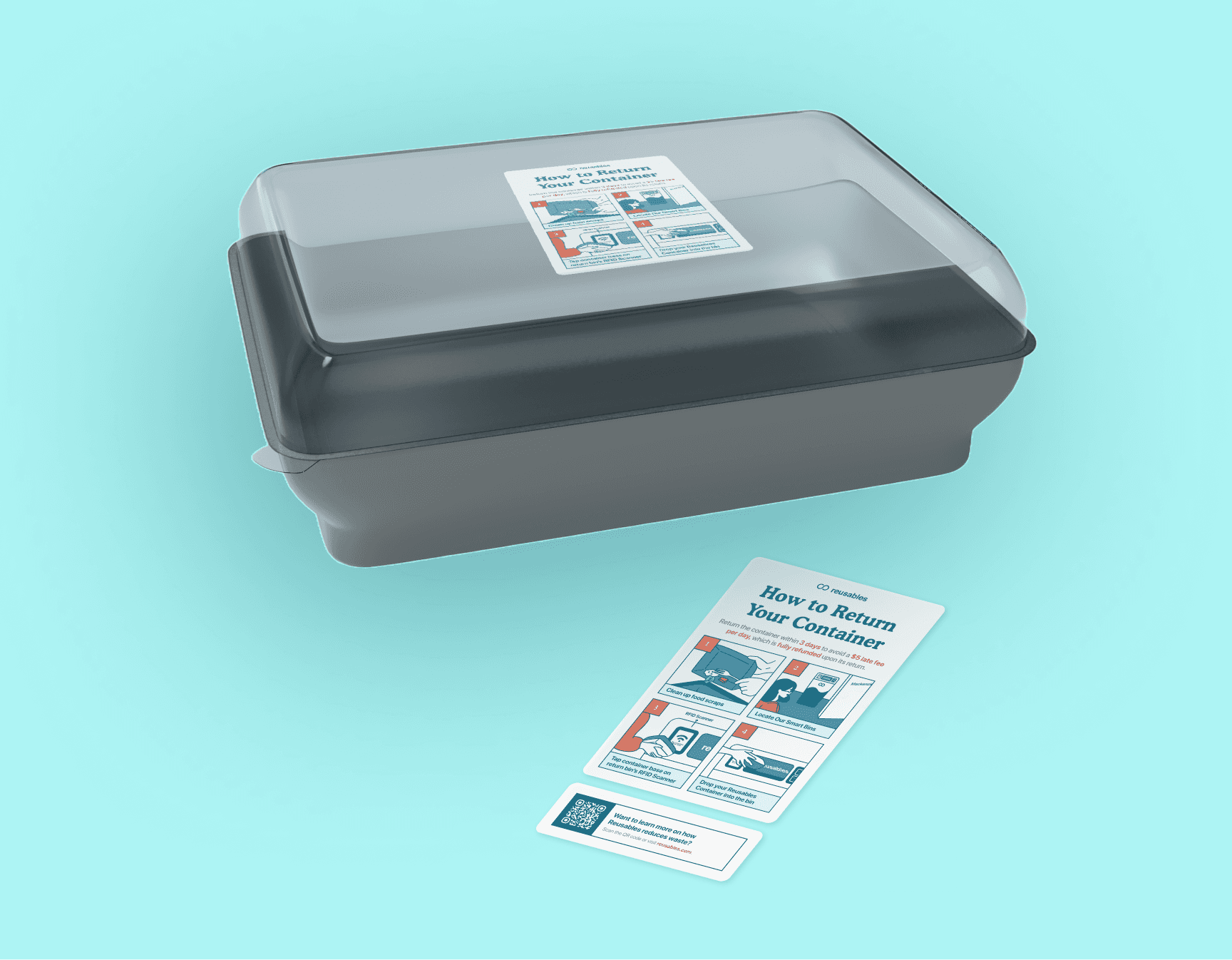
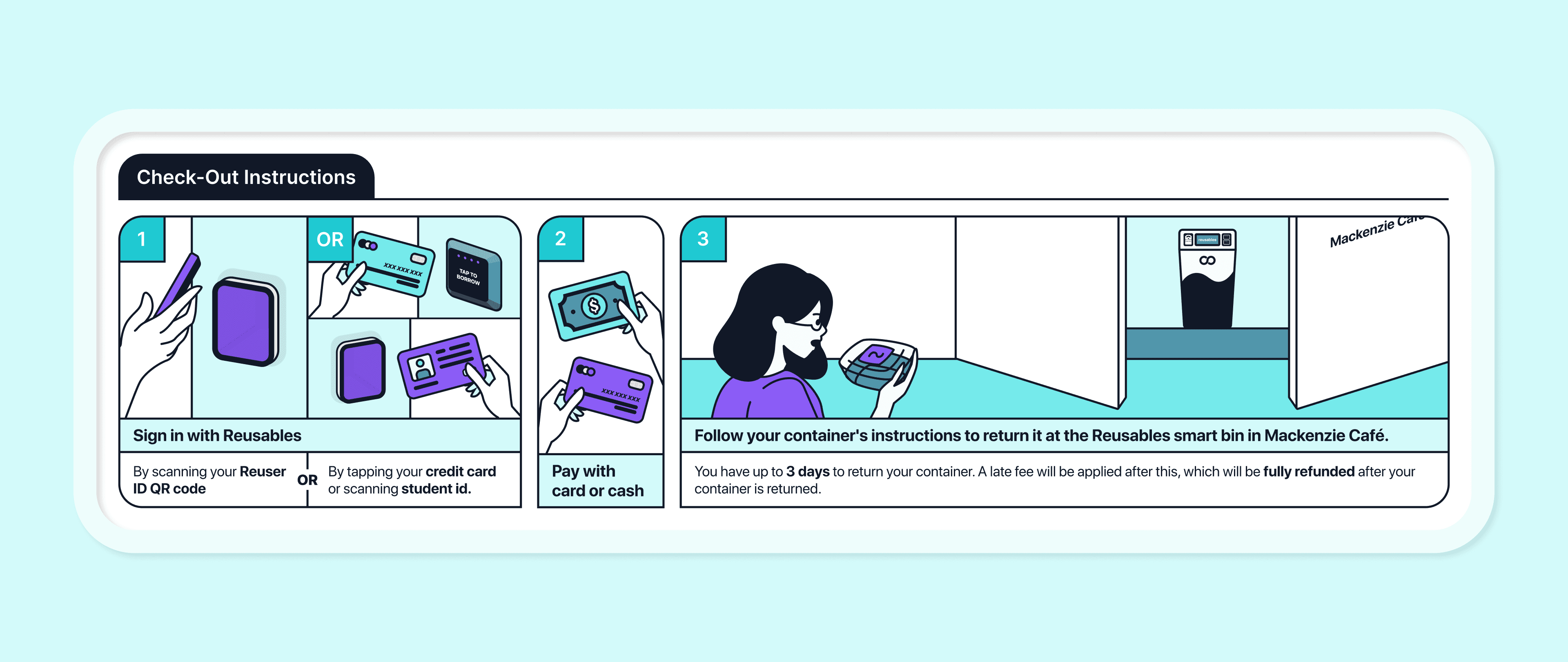
Unbranded Reusables containers lead to first-time users to opt-in the program unknowingly. Users are often unaware they need to check out the container or how to complete the process

Unbranded Reusables containers lead to first-time users to opt-in the program unknowingly. Users are often unaware they need to check out the container or how to complete the process

Solution Impact

I designed visual instructions so that users are informed of the program and have a consistent reference point throughout the borrowing and return process.

I designed visual instructions so that users are informed of the program and have a consistent reference point throughout the borrowing and return process.

LCD SCREEN INTERFACE

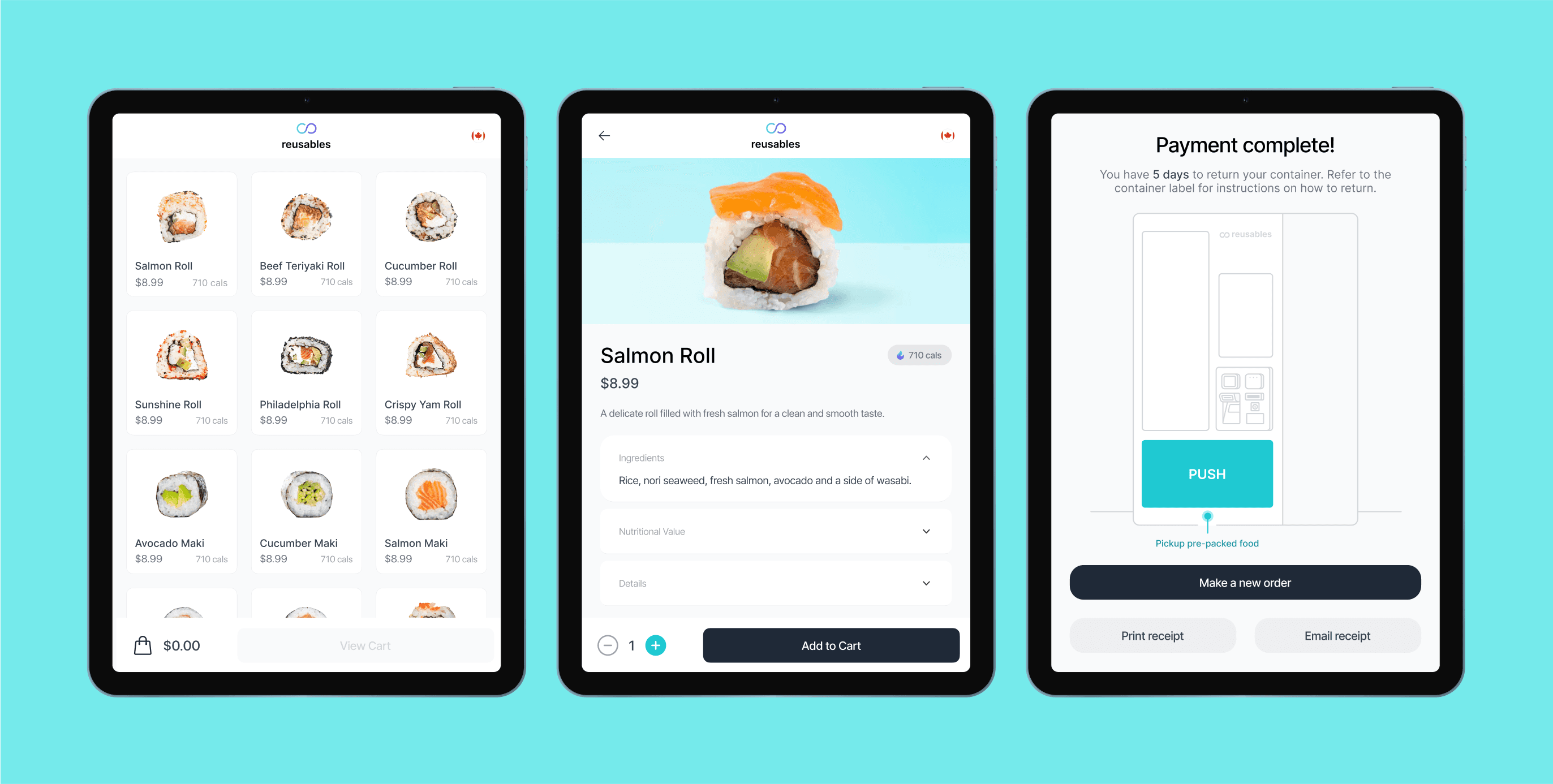
Single-step registration.

Pain Point

Users face a multi-step checkout process which leads to confusion. Additionally, verbal instructions from staff are often unclear and hard to remember.

Users face a multi-step checkout process which leads to confusion. Additionally, verbal instructions from staff are often unclear and hard to remember.

Solution Impact

The interface guides users through a clear and intuitive checkout process. This reduces confusion and minimizes steps.

The interface guides users through a clear and intuitive checkout process. This reduces confusion and minimizes steps.

LCD SCREEN INTERFACE

Differentiating payment from container registration.

Pain Point

Unfamiliar registration devices are placed near similar-looking pay terminals. Many users mistakenly believe they’ve completed the process after paying.

Unfamiliar registration devices are placed near similar-looking pay terminals. Many users mistakenly believe they’ve completed the process after paying.

Solution Impact

I redesigned the user flow by placing checkout before payment along with step-by-step guidance. This helped reduce confusion and ensured users completed both actions.

I redesigned the user flow by placing checkout before payment along with step-by-step guidance. This helped reduce confusion and ensured users completed both actions.

RETURNING CONTAINERS

Informative packaging as a return guide.
Pain Point

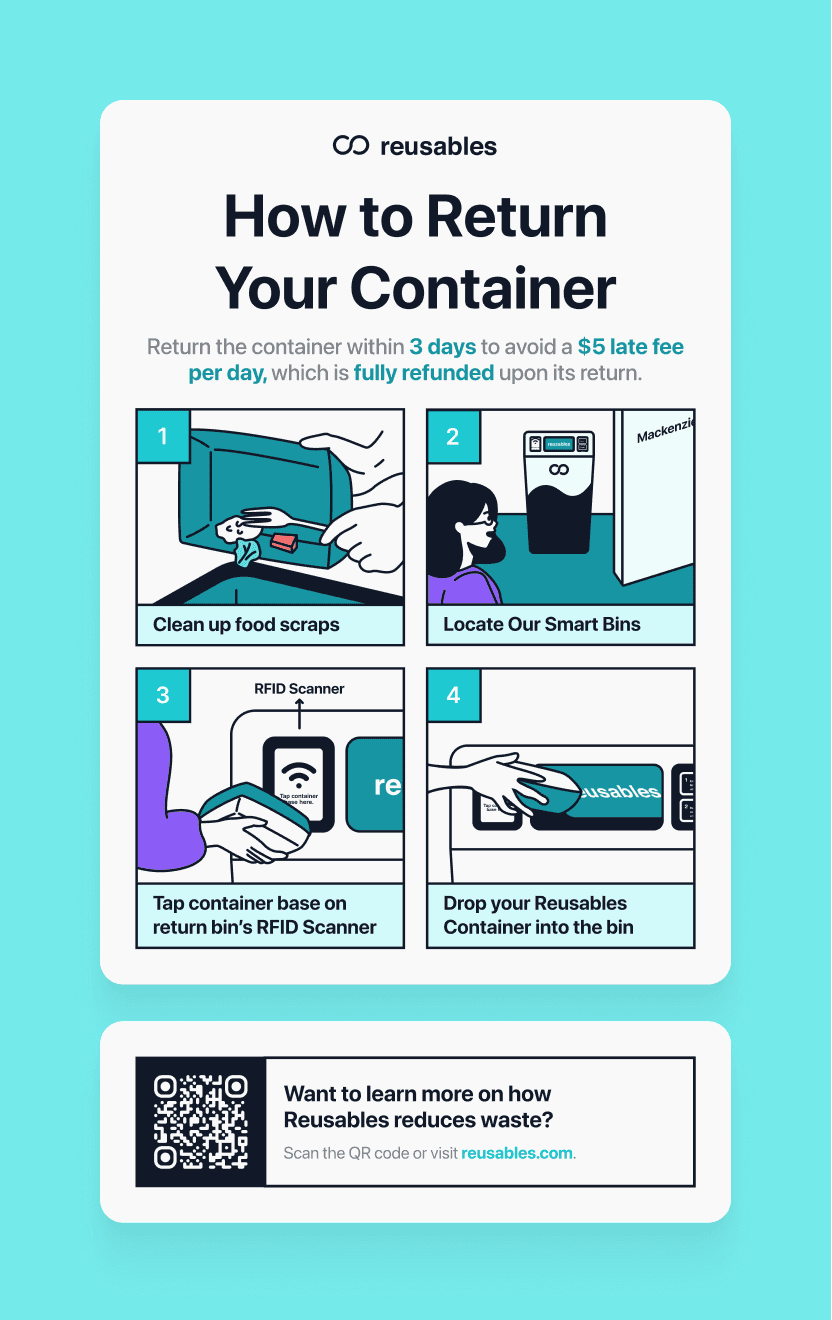
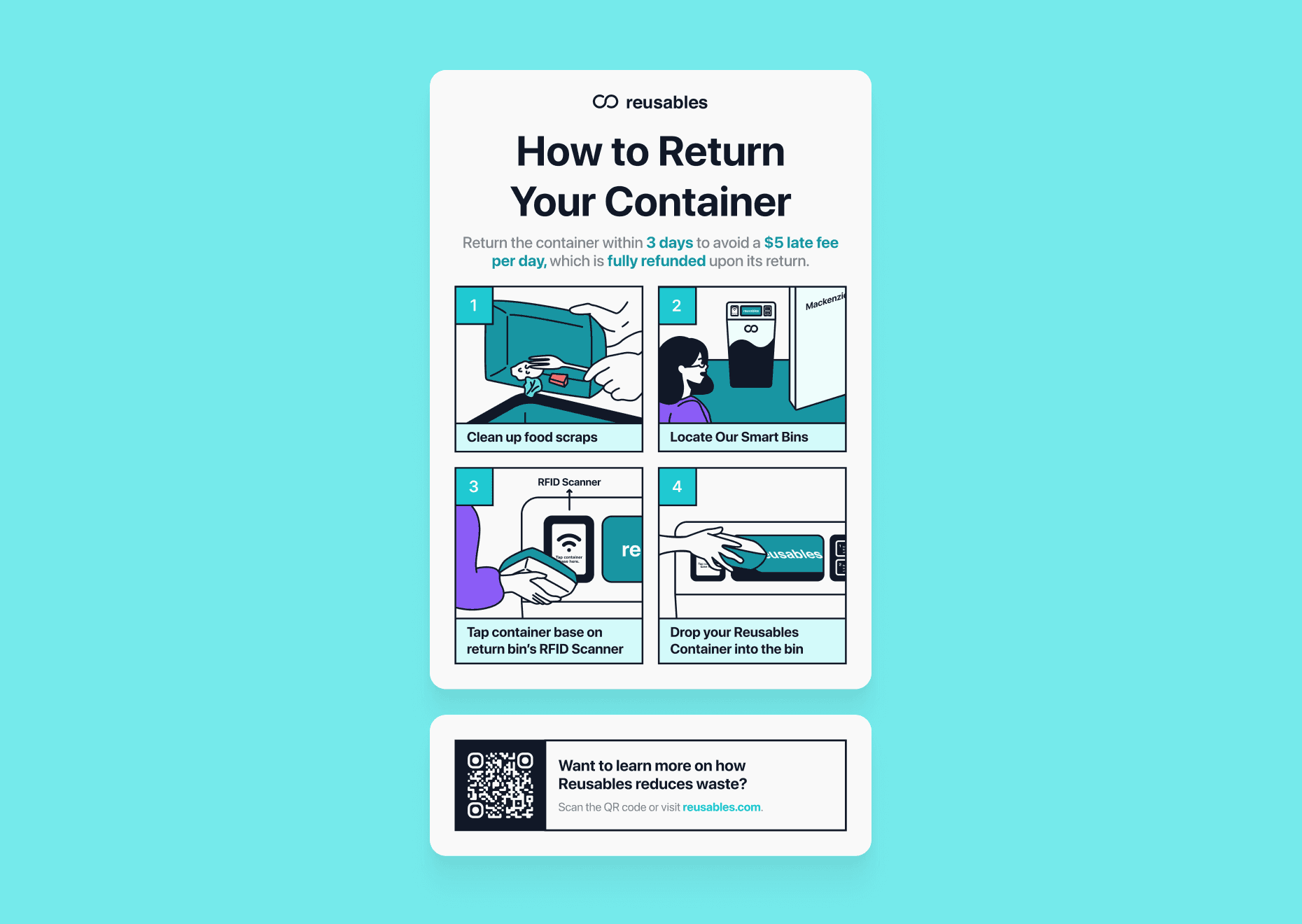
Days after using Reusables, users often forget how to return their containers. They have to ask staff again, which takes extra time.

Days after using Reusables, users often forget how to return their containers. They have to ask staff again, which takes extra time.

Solution Impact

I designed an eco-friendly, dishwasher-safe sticker placed directly on the container to provide clear return instructions for users.

I designed an eco-friendly, dishwasher-safe sticker placed directly on the container to provide clear return instructions for users.

HOW DID I GET HERE?

UX research and design process

Celine sent a message.

1m

Generative
Research

DESIGN ETHNOGRAPHY

Understanding the end-to-end container borrowing experience.

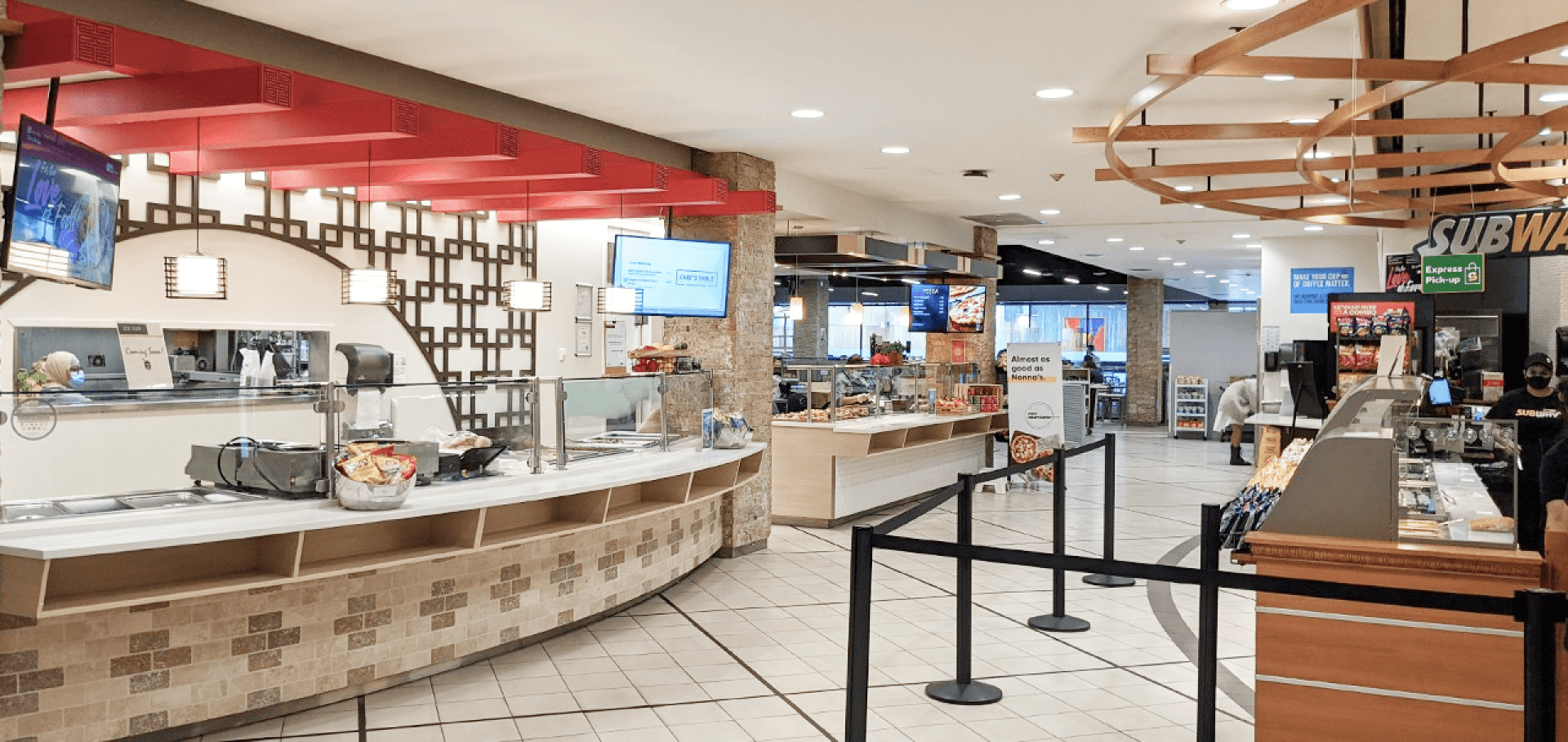
To find intervention opportunities, I met with the client and requested data on operating locations, focusing on those with the highest borrowing and return rates. Based on the data received, I conducted onsite ethnography at locations with the highest interactions to understand the experience of users and food service workers.

🍽️

3-Day Field Research in 3 Partnered Restaurants

Understanding the borrowing and returning process between servers and customers via the Reusables mobile app.

🧑‍🏫

2-Day Field Research in Simon Fraser University’s Mackenzie Cafeteria

Observing interactions between food service workers, cashiers, and users with tap machines the new return bins.

THE CHALLENGE

Expanding my research strategy.

Expanding my research strategy.

An Unexpected Roadblock

Restaurant premises rarely permit external research activities as customers could not be disturbed during their dining experience, and businesses see little benefit in participating.

Rising to the Challenge

To address this issue, I shifted our primary touchpoint to the Mackenzie Café, which had one of the highest interaction rates due to mandating Reusables containers for specific vendors.

USER INTERVIEWS

Talking to all involved workers and customers.

To gain a further understanding of the users, our team conducted ride-along interviews with 50 users, two cafeteria stall workers, one cashier operator, and a return bin workers. I also conducted 10 additional remote interviews to gain deeper insights on potential users’ perceptions surrounding sustainability, food containers, and the program itself.

Pain Point | 1

Reliance on workers for instructions.

“When i was checking out, the cashier was explaining the reusables check-out and return process but it sounded so complicated and I was really confused. It took at least 3 minutes of back and forth cause I kept asking questions.”

Pain Point | 2

Lack of program information causes misunderstanding of ownership.

“I had the sushi and it automatically came in it, but I didn’t realize it was a program until the cashier lady explained it to me. I thought the restaurant just provided reusable containers because it was vegan and wanted to promote sustainability. I thought they owned it.”

Pain Point | 3

Borrowing reusable containers are more inconvenient.

“It was rough the first time because there was like 3 machines that you need to use to check-out the containers. Afterwards, you remember the process so it’s not really as bad, but it is definitely more time-consuming than if you were to do regular takeout.”

Pain Point | 4

Lack of guidance for return.

“The cashier explained the return process to me during check-out, but by the time I finished everything I already forgot everything <laughs>. I ended up just giving her back the container since I didn’t know what to do and was in a rush.”

Celine sent a message.

1m

UX Deliverables

USER PERSONAS

Finding users that allow for intervention opportunities.

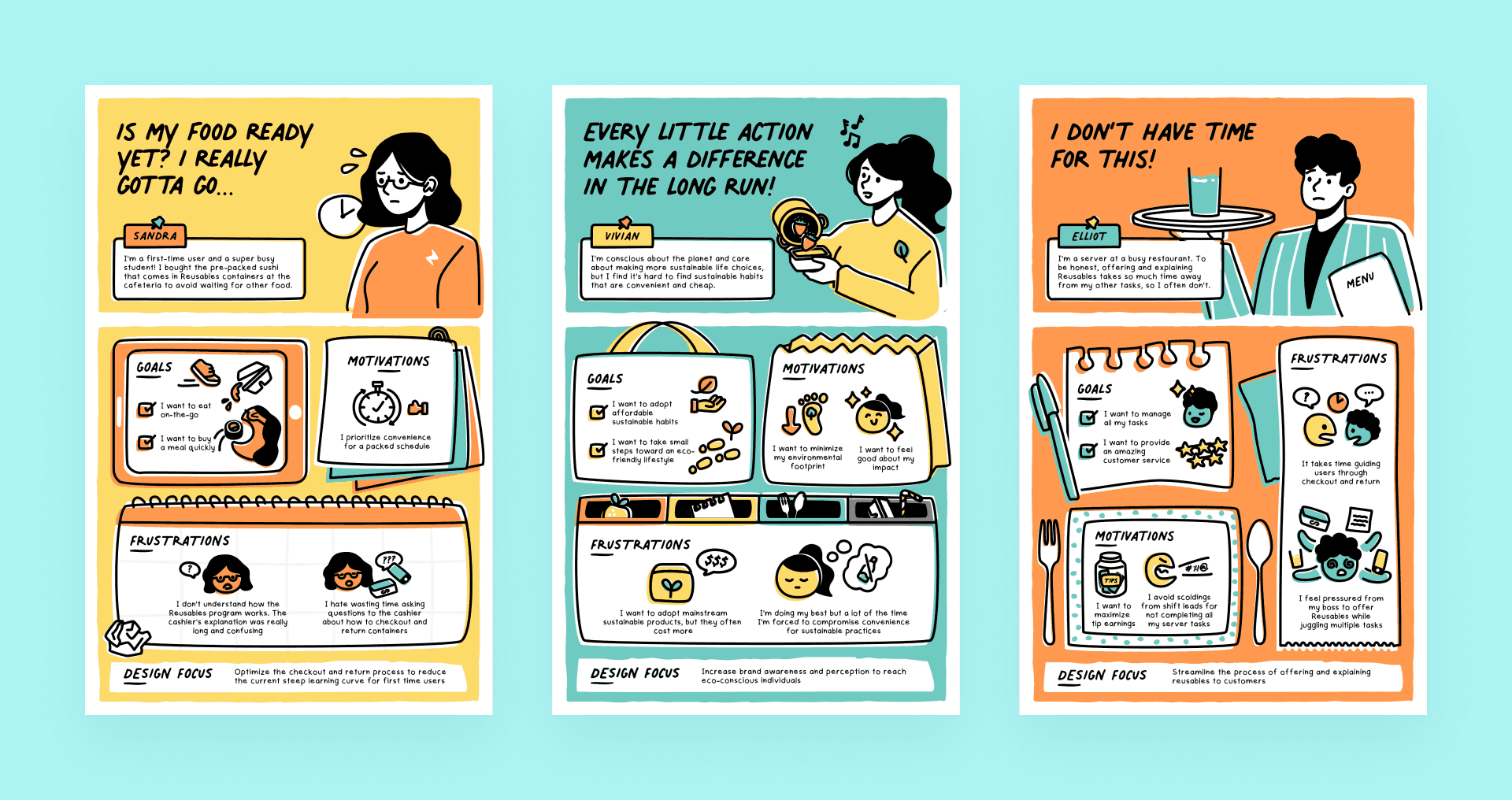
I synthesized three personas that captured common traits and pain points from our research findings. I created these personas as a tangible UX deliverable to help Reusables stakeholders better understand their users and spark informed discussions around design decisions.

USER JOURNEY MAPS

Identifying pain points by mapping our users’ journeys.

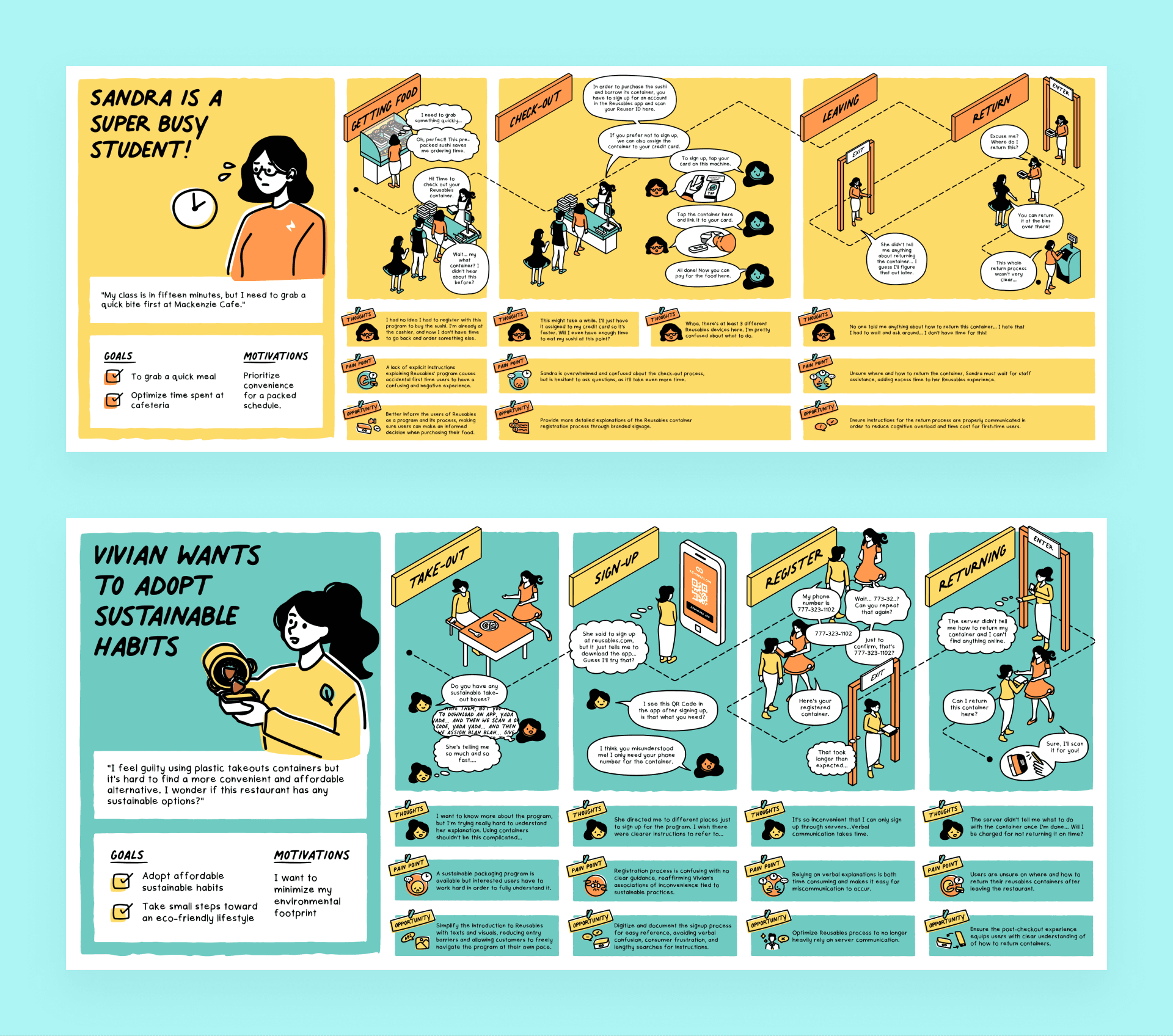
We created two journey maps to visualize how users interact with the Reusables program. Like the personas, they served as a communication tool for Reusables stakeholders, helping validate existing assumptions, uncover new insights, and spark meaningful discussions around pain points and opportunities.

NARROWING THE FOCUS

Focusing on Sandra for a guaranteed impact.

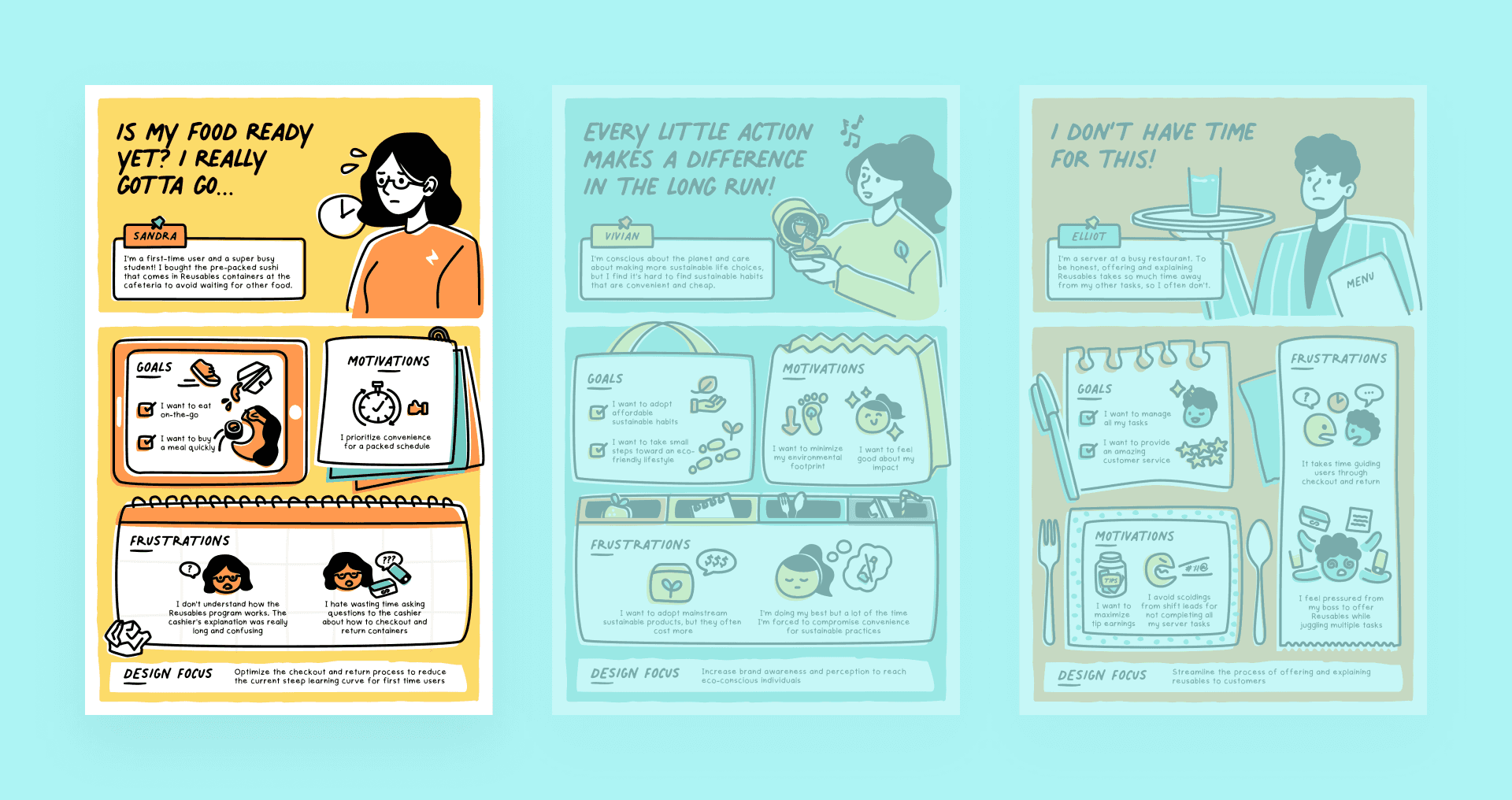
For this project, I chose to focus on a first-time user named Sandra. Unlike other personas, Sandra had reliable research data behind her experience and represented a clear opportunity for intervention.

DESIGN CHALLENGE

How might we streamline the registration-to-return process for first-time users to encourage them in choosing Reusables over regular takeout?

Celine sent a message.

1m

Product Discovery

IDEATION

Brainstorming workshop.

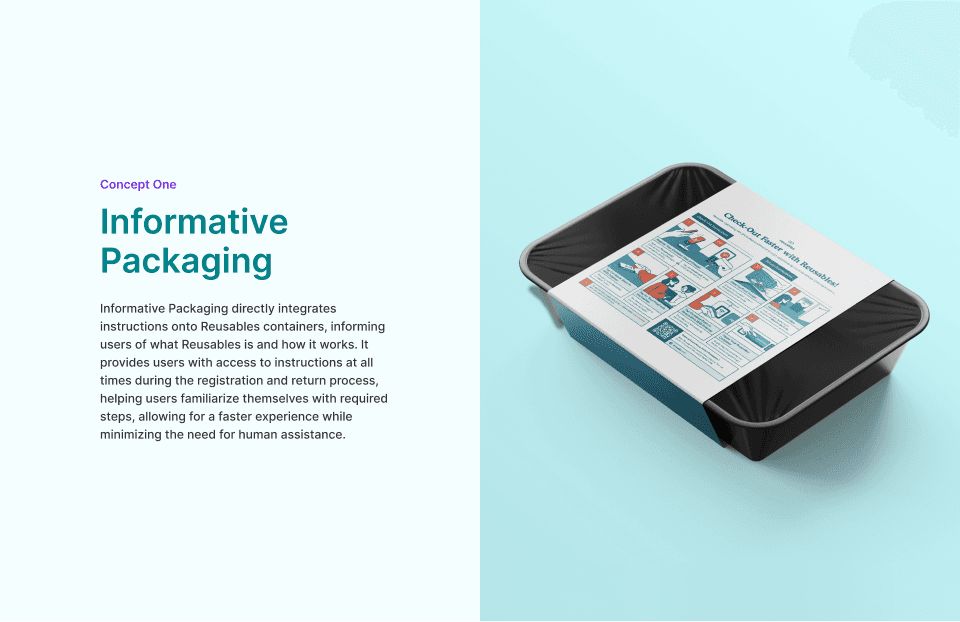
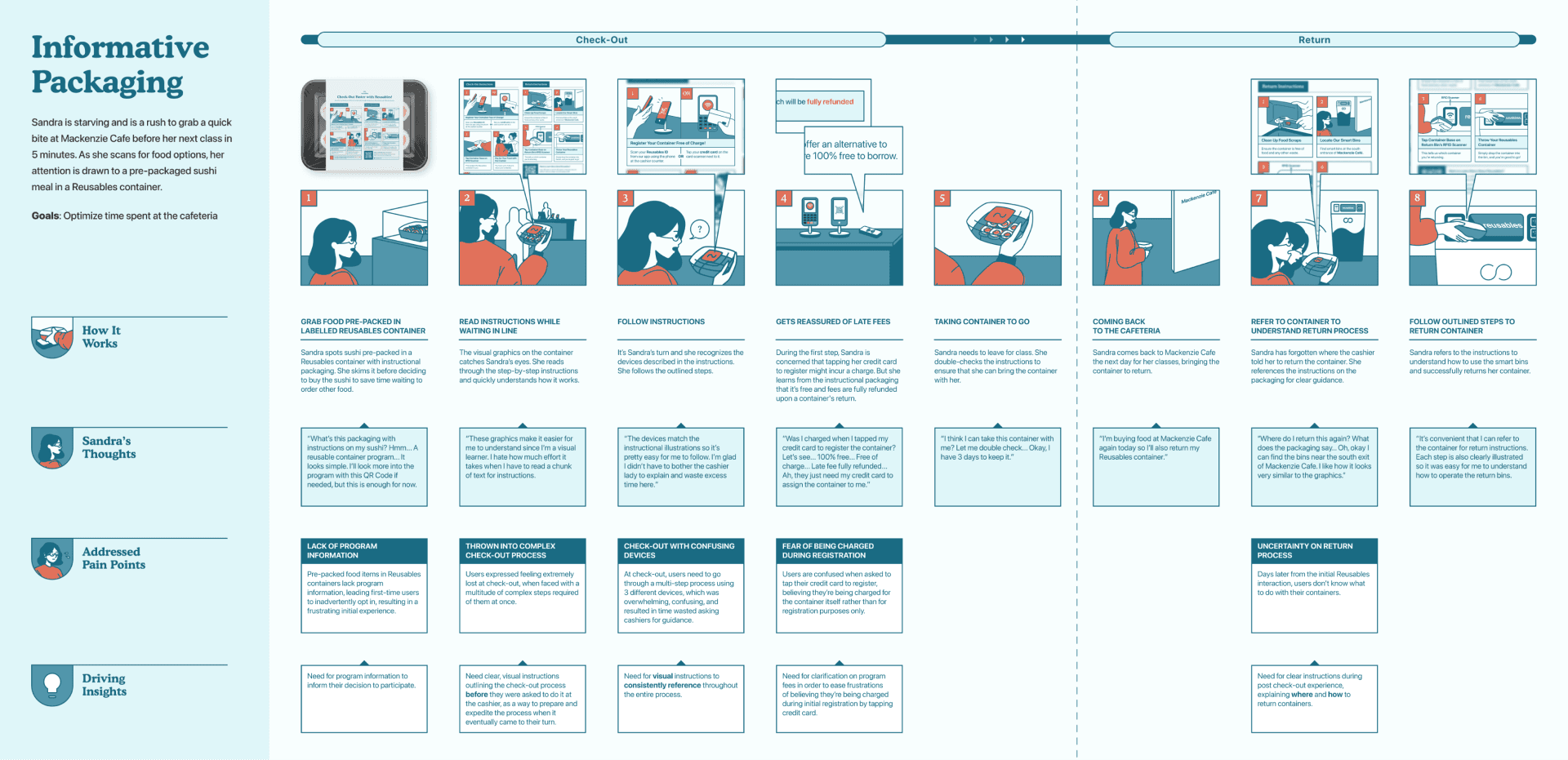
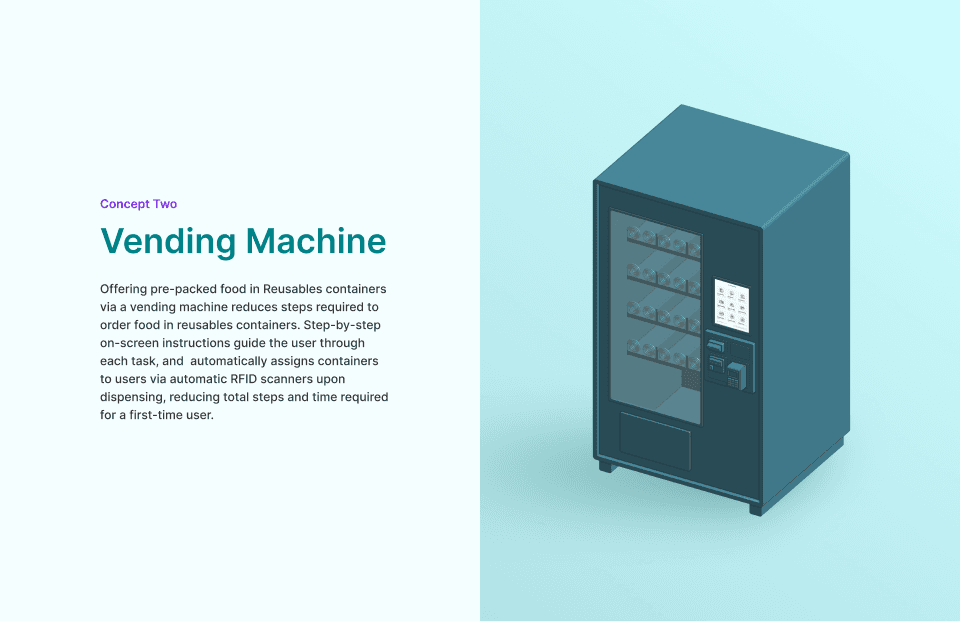
Our explored two concept directions to address current pain points. For each idea, we created a concept posters and storyboards to illustrate the benefits to each persona and its incorporation into their user journeys.

PARTICIPATORY WORKSHOP

Validating our ideas with key stakeholders and users.

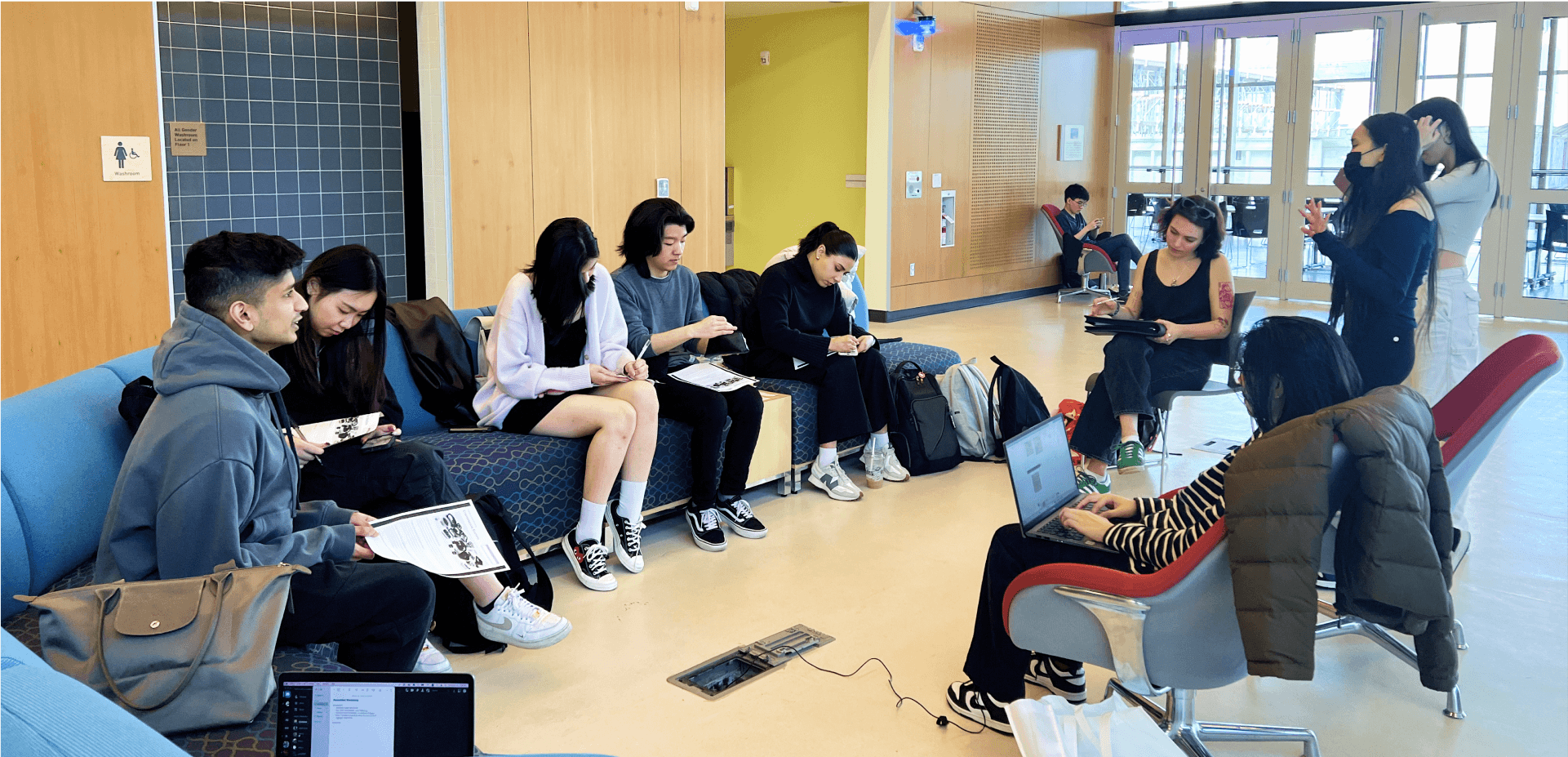
I co-hosted a 4-hour long in-person workshop with 5 first-time users and a Reusable stakeholder to align user needs and generate diverse perspectives. Our workshop activities also include Icebreaker Game, Conversation Starters, The Five Whys, Roleplay, and Ideation.

🧢

Clarify the impact and extent of guidance offered by food service workers when facilitating first-time registrations.
  • Do users find food service workers as a reliable source of information?

  • How do food service workers help out with the Reusables process?

🗂️

Gather behavioral patterns during registration and return to verify current researched pain points.
  • What are the common challenges encountered during the process?

  • Which aspects of the experience do users tend to focus on?

  • How comfortable are users to inquire about Reusables to workers?

📈

Validate user motivations that drive their experience with Reusables.
  • How do first-time users values align with the driving values of the Reusables program and stakeholders?

  • What factors or motivations might incentivize first-time users to continue engaging with the program again?

  • What influences first-time users' decisions to engage with the program?

Finding | 1

A need for program information before opt-in.

Users and company stakeholders agreed that providing comprehensive program information on food automatically packaged in Reusables containers would facilitate easier program use for first-time users.

Finding | 2

Preference for visual cues and reference instructions.

Users highlighted the importance of having readily accessible reference instructions to consult as needed and emphasized a focus on clear visual information explaining these instructions

Finding | 3

Users rely on staff explanation.

Users expressed feeling frustrated that they were forced to rely on verbal instructions, as it was both time consuming, confusing and sometimes inaccurate.

Finding | 4

Need for clear and accessible return policies.

Users expressed a desire for clear visual cues indicating the return locations. Additionally, participants expressed a need for receiving reminders about return deadlines.

Celine sent a message.

1m

Solution Development

FINAL STORYBOARD

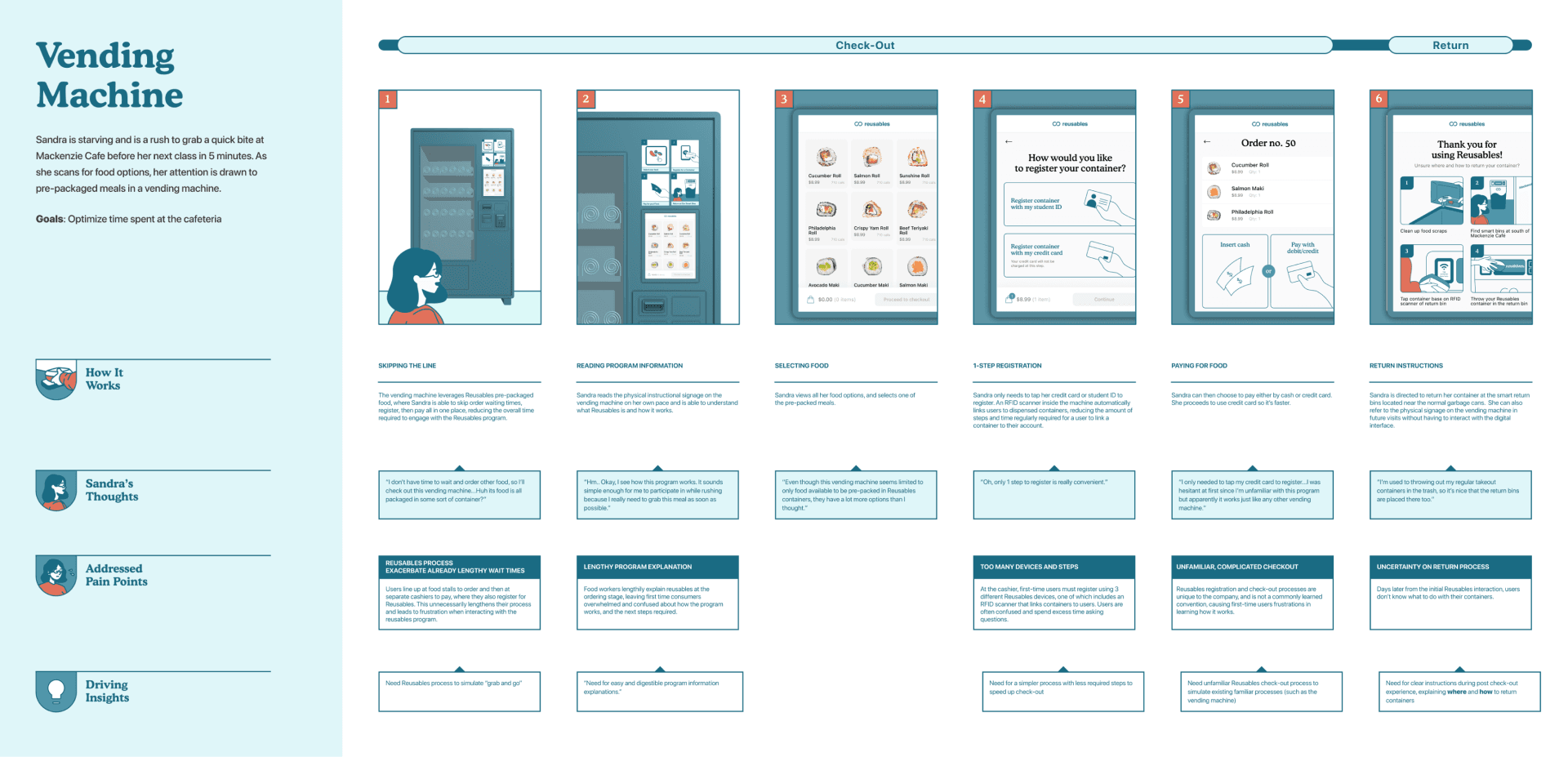
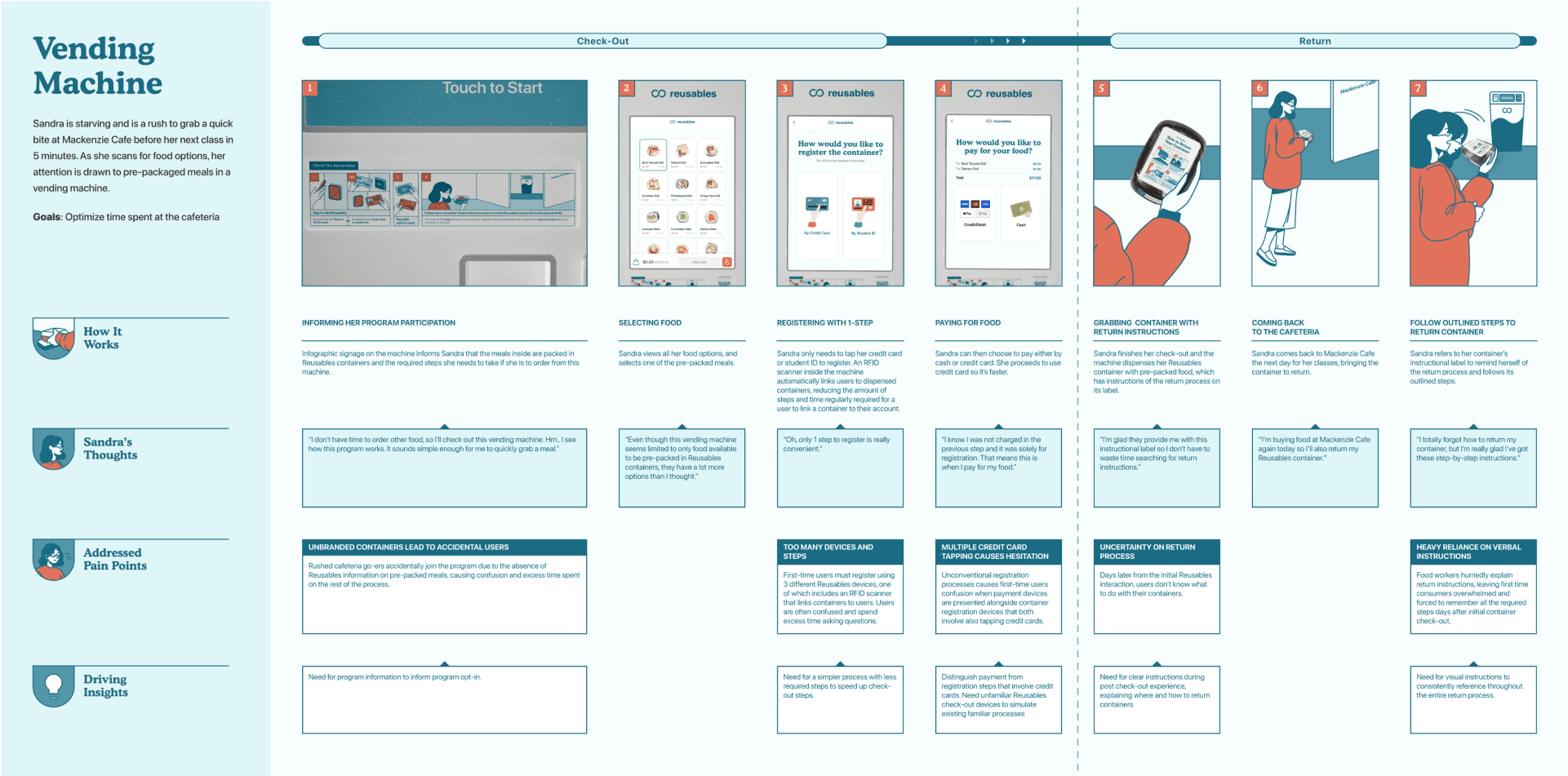
Mapping out the final journey and addressed pain points.

Drawing insights from our participatory workshop, our team decided upon the smart vending machine that includes return labels on the containers.

HUMAN ERGONOMICS

Designing for accessibility.

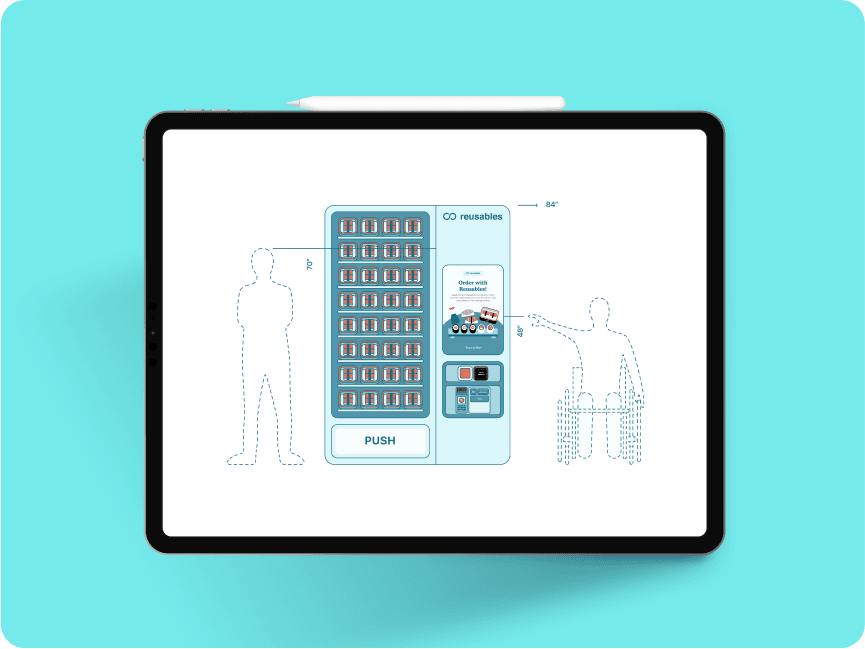
To ensure the vending machine was accessible to all users, I planned dimensions, reach ranges, and interface height to accommodate diverse physical needs. I then handed off the blueprint to our 3D artist for prototyping and development.

INTERFACE DESIGN

Designing the touchscreen interface.

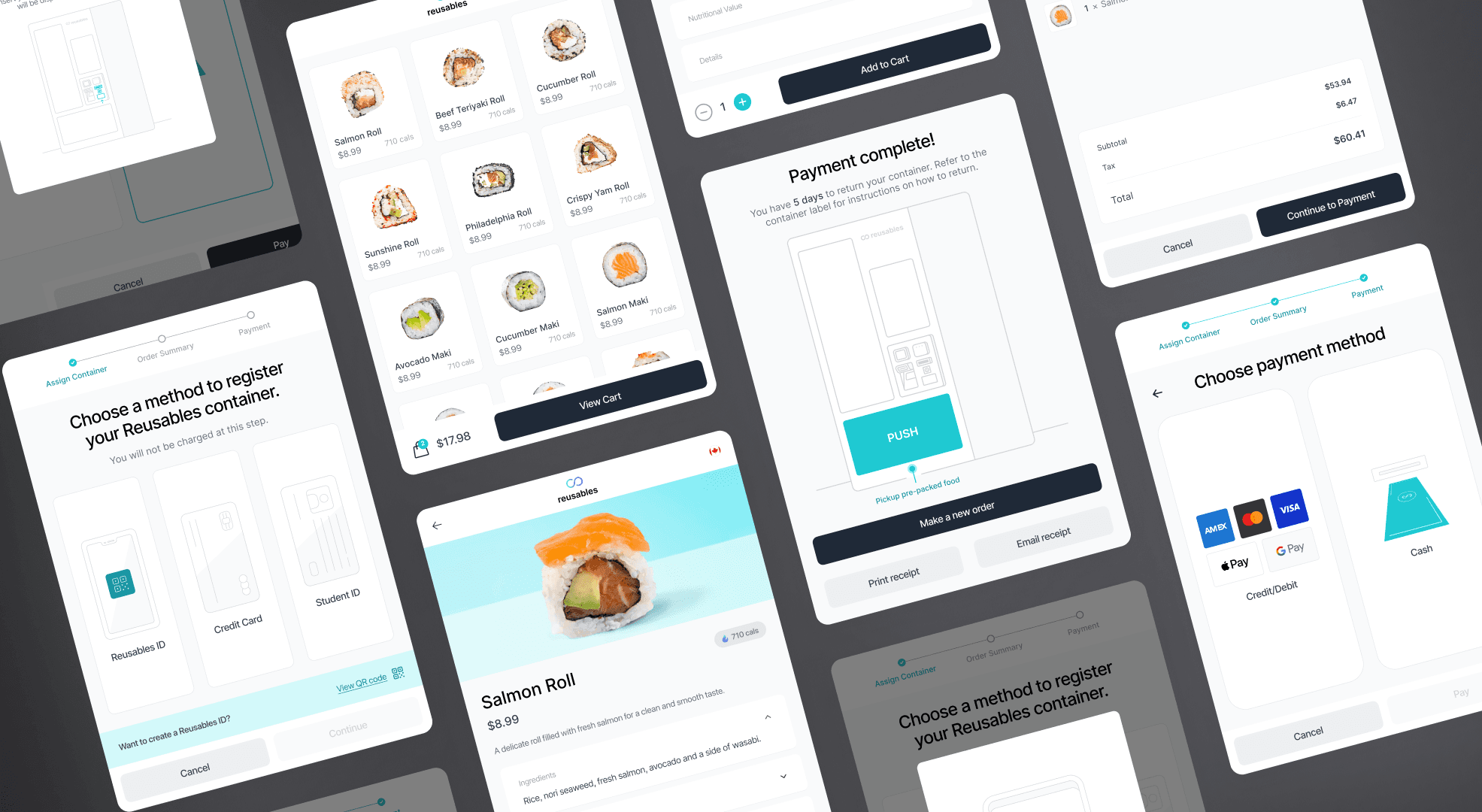
I created all interface components and prototyped the vending machine’s touchscreen experience using Figma. The UI features step-by-step guidance, simplified language, and visual illustrations to support first-time users throughout the borrowing and payment process.

Celine sent a message.

1m

Generative
Research

DESIGN ETHNOGRAPHY

Understanding the end-to-end container borrowing experience.

To find intervention opportunities, I met with the client and requested data on operating locations, focusing on those with the highest borrowing and return rates. Based on the data received, I conducted onsite ethnography at locations with the highest interactions to understand the experience of users and food service workers.

🍽️

3-Day Field Research in 3 Partnered Restaurants

Understanding the borrowing and returning process between servers and customers via the Reusables mobile app.

🧑‍🏫

2-Day Field Research in Simon Fraser University’s Mackenzie Cafeteria

Observing interactions between food service workers, cashiers, and users with tap machines the new return bins.

THE CHALLENGE

Expanding my research strategy.

Expanding my research strategy.

An Unexpected Roadblock

Restaurant premises rarely permit external research activities as customers could not be disturbed during their dining experience, and businesses see little benefit in participating.

Rising to the Challenge

To address this issue, I shifted our primary touchpoint to the Mackenzie Café, which had one of the highest interaction rates due to mandating Reusables containers for specific vendors.

USER INTERVIEWS

Talking to all involved workers and customers.

To gain a further understanding of the users, our team conducted ride-along interviews with 50 users, two cafeteria stall workers, one cashier operator, and a return bin workers. I also conducted 10 additional remote interviews to gain deeper insights on potential users’ perceptions surrounding sustainability, food containers, and the program itself.

Pain Point | 1

Reliance on workers for instructions.

“When i was checking out, the cashier was explaining the reusables check-out and return process but it sounded so complicated and I was really confused. It took at least 3 minutes of back and forth cause I kept asking questions.”

Pain Point | 2

Lack of program information causes misunderstanding of ownership.

“I had the sushi and it automatically came in it, but I didn’t realize it was a program until the cashier lady explained it to me. I thought the restaurant just provided reusable containers because it was vegan and wanted to promote sustainability. I thought they owned it.”

Pain Point | 3

Borrowing reusable containers are more inconvenient.

“It was rough the first time because there was like 3 machines that you need to use to check-out the containers. Afterwards, you remember the process so it’s not really as bad, but it is definitely more time-consuming than if you were to do regular takeout.”

Pain Point | 4

Lack of guidance for return.

“The cashier explained the return process to me during check-out, but by the time I finished everything I already forgot everything <laughs>. I ended up just giving her back the container since I didn’t know what to do and was in a rush.”

Celine sent a message.

1m

UX Deliverables

USER PERSONAS

Finding users that allow for intervention opportunities.

I synthesized three personas that captured common traits and pain points from our research findings. I created these personas as a tangible UX deliverable to help Reusables stakeholders better understand their users and spark informed discussions around design decisions.

USER JOURNEY MAPS

Identifying pain points by mapping our users’ journeys.

We created two journey maps to visualize how users interact with the Reusables program. Like the personas, they served as a communication tool for Reusables stakeholders, helping validate existing assumptions, uncover new insights, and spark meaningful discussions around pain points and opportunities.

NARROWING THE FOCUS

Focusing on Sandra for a guaranteed impact.

For this project, I chose to focus on a first-time user named Sandra. Unlike other personas, Sandra had reliable research data behind her experience and represented a clear opportunity for intervention.

DESIGN CHALLENGE

How might we streamline the registration-to-return process for first-time users to encourage them in choosing Reusables over regular takeout?

Celine sent a message.

1m

Product Discovery

IDEATION

Brainstorming workshop.

Our explored two concept directions to address current pain points. For each idea, we created a concept posters and storyboards to illustrate the benefits to each persona and its incorporation into their user journeys.

PARTICIPATORY WORKSHOP

Validating our ideas with key stakeholders and users.

I co-hosted a 4-hour long in-person workshop with 5 first-time users and a Reusable stakeholder to align user needs and generate diverse perspectives. Our workshop activities also include Icebreaker Game, Conversation Starters, The Five Whys, Roleplay, and Ideation.

🧢

Clarify the impact and extent of guidance offered by food service workers when facilitating first-time registrations.
  • Do users find food service workers as a reliable source of information?

  • How do food service workers help out with the Reusables process?

🗂️

Gather behavioral patterns during registration and return to verify current researched pain points.
  • What are the common challenges encountered during the process?

  • Which aspects of the experience do users tend to focus on?

  • How comfortable are users to inquire about Reusables to workers?

📈

Validate user motivations that drive their experience with Reusables.
  • How do first-time users values align with the driving values of the Reusables program and stakeholders?

  • What factors or motivations might incentivize first-time users to continue engaging with the program again?

  • What influences first-time users' decisions to engage with the program?

Finding | 1

A need for program information before opt-in.

Users and company stakeholders agreed that providing comprehensive program information on food automatically packaged in Reusables containers would facilitate easier program use for first-time users.

Finding | 2

Preference for visual cues and reference instructions.

Users highlighted the importance of having readily accessible reference instructions to consult as needed and emphasized a focus on clear visual information explaining these instructions

Finding | 3

Users rely on staff explanation.

Users expressed feeling frustrated that they were forced to rely on verbal instructions, as it was both time consuming, confusing and sometimes inaccurate.

Finding | 4

Need for clear and accessible return policies.

Users expressed a desire for clear visual cues indicating the return locations. Additionally, participants expressed a need for receiving reminders about return deadlines.

Celine sent a message.

1m

Solution Development

FINAL STORYBOARD

Mapping out the final journey and addressed pain points.

Drawing insights from our participatory workshop, our team decided upon the smart vending machine that includes return labels on the containers.

HUMAN ERGONOMICS

Designing for accessibility.

To ensure the vending machine was accessible to all users, I planned dimensions, reach ranges, and interface height to accommodate diverse physical needs. I then handed off the blueprint to our 3D artist for prototyping and development.

INTERFACE DESIGN

Designing the touchscreen interface.

I created all interface components and prototyped the vending machine’s touchscreen experience using Figma. The UI features step-by-step guidance, simplified language, and visual illustrations to support first-time users throughout the borrowing and payment process.

Celine sent a message.

1m

Generative
Research

DESIGN ETHNOGRAPHY

Understanding the end-to-end container borrowing experience.

To find intervention opportunities, I met with the client and requested data on operating locations, focusing on those with the highest borrowing and return rates. Based on the data received, I conducted onsite ethnography at locations with the highest interactions to understand the experience of users and food service workers.

🍽️

3-Day Field Research in 3 Partnered Restaurants

Understanding the borrowing and returning process between servers and customers via the Reusables mobile app.

🧑‍🏫

2-Day Field Research in Simon Fraser University’s Mackenzie Cafeteria

Observing interactions between food service workers, cashiers, and users with tap machines the new return bins.

THE CHALLENGE

Expanding my research strategy.

An Unexpected Roadblock

Restaurant premises rarely permit external research activities as customers could not be disturbed during their dining experience, and businesses see little benefit in participating.

Rising to the Challenge

To address this issue, I shifted our primary touchpoint to the Mackenzie Café, which had one of the highest interaction rates due to mandating Reusables containers for specific vendors.

USER INTERVIEWS

Talking to all involved workers and customers.

To gain a further understanding of the users, our team conducted ride-along interviews with 50 users, two cafeteria stall workers, one cashier operator, and a return bin workers. I also conducted 10 additional remote interviews to gain deeper insights on potential users’ perceptions surrounding sustainability, food containers, and the program itself.

Pain Point | 1

Reliance on workers for instructions.

“When i was checking out, the cashier was explaining the reusables check-out and return process but it sounded so complicated and I was really confused. It took at least 3 minutes of back and forth cause I kept asking questions.”

Pain Point | 2

Lack of program information causes misunderstanding of ownership.

“I had the sushi and it automatically came in it, but I didn’t realize it was a program until the cashier lady explained it to me. I thought the restaurant just provided reusable containers because it was vegan and wanted to promote sustainability. I thought they owned it.”

Pain Point | 3

Borrowing reusable containers are more inconvenient.

“It was rough the first time because there was like 3 machines that you need to use to check-out the containers. Afterwards, you remember the process so it’s not really as bad, but it is definitely more time-consuming than if you were to do regular takeout.”

Pain Point | 4

Lack of guidance for return.

“The cashier explained the return process to me during check-out, but by the time I finished everything I already forgot everything <laughs>. I ended up just giving her back the container since I didn’t know what to do and was in a rush.”

Celine sent a message.

1m

UX Deliverables

USER PERSONAS

Finding users that allow for intervention opportunities.

I synthesized three personas that captured common traits and pain points from our research findings. I created these personas as a tangible UX deliverable to help Reusables stakeholders better understand their users and spark informed discussions around design decisions.

USER JOURNEY MAPS

Identifying pain points by mapping our users’ journeys.

We created two journey maps to visualize how users interact with the Reusables program. Like the personas, they served as a communication tool for Reusables stakeholders, helping validate existing assumptions, uncover new insights, and spark meaningful discussions around pain points and opportunities.

NARROWING THE FOCUS

Focusing on Sandra for a guaranteed impact.

For this project, I chose to focus on a first-time user named Sandra. Unlike other personas, Sandra had reliable research data behind her experience and represented a clear opportunity for intervention.

DESIGN CHALLENGE

How might we streamline the registration-to-return process for first-time users to encourage them in choosing Reusables over regular takeout?

Celine sent a message.

1m

Product
Discovery

IDEATION

Brainstorming workshop.

Our explored two concept directions to address current pain points. For each idea, we created a concept posters and storyboards to illustrate the benefits to each persona and its incorporation into their user journeys.

PARTICIPATORY WORKSHOP

Validating our ideas with key stakeholders and users.

I co-hosted a 4-hour long in-person workshop with 5 first-time users and a Reusable stakeholder to align user needs and generate diverse perspectives. Our workshop activities also include Icebreaker Game, Conversation Starters, The Five Whys, Roleplay, and Ideation.

🧢

Clarify the impact and extent of guidance offered by food service workers when facilitating first-time registrations.
  • Do users find food service workers as a reliable source of information?

  • How do food service workers help out with the Reusables process?

🗂️

Gather behavioral patterns during registration and return to verify current researched pain points.
  • What are the common challenges encountered during the process?

  • Which aspects of the experience do users tend to focus on?

  • How comfortable are users to inquire about Reusables to workers?

📈

Validate user motivations that drive their experience with Reusables.
  • How do first-time users values align with the driving values of the Reusables program and stakeholders?

  • What factors or motivations might incentivize first-time users to continue engaging with the program again?

  • What influences first-time users' decisions to engage with the program?

Finding | 1

A need for program information before opt-in.

Users and company stakeholders agreed that providing comprehensive program information on food automatically packaged in Reusables containers would facilitate easier program use for first-time users.

Finding | 2

Preference for visual cues and reference instructions.

Users highlighted the importance of having readily accessible reference instructions to consult as needed and emphasized a focus on clear visual information explaining these instructions

Finding | 3

Users rely on staff explanation.

Users expressed feeling frustrated that they were forced to rely on verbal instructions, as it was both time consuming, confusing and sometimes inaccurate.

Finding | 4

Need for clear and accessible return policies.

Users expressed a desire for clear visual cues indicating the return locations. Additionally, participants expressed a need for receiving reminders about return deadlines.

Celine sent a message.

1m

Solution Development

FINAL STORYBOARD

Mapping out the final journey and addressed pain points.

Drawing insights from our participatory workshop, our team decided upon the smart vending machine that includes return labels on the containers.

HUMAN ERGONOMICS

Designing for accessibility.

To ensure the vending machine was accessible to all users, I planned dimensions, reach ranges, and interface height to accommodate diverse physical needs. I then handed off the blueprint to our 3D artist for prototyping and development.

INTERFACE DESIGN

Designing the touchscreen interface.

I created all interface components and prototyped the vending machine’s touchscreen experience using Figma. The UI features step-by-step guidance, simplified language, and visual illustrations to support first-time users throughout the borrowing and payment process.

IMPACT

What is the outcome of my research efforts?

Driving Program Improvements

Our findings are being used to inform the design of clearer workflows and improved onboarding for new and first-time users.

Amplifying the Customer's Voice

My research increased awareness and understanding of user pain points among Reusable stakeholders. This helped ensure that real customer needs were prioritized in future product and service decisions.

RETROSPECTIVE

Final reflections and learnings.

Working on Reusables pushed me to think critically about understanding different segments within the program. While promoting sustainable habits may add an extra step for users, I learned that simplifying processes with the user in mind is crucial for fostering widespread adoption of new practices.

Understanding users with design ethnography

Despite reading about the system beforehand, it wasn’t until I observed and went through the full experience that I fully understood the confusion users face. Ethnography gave me a new perspective and helped me address existing pain points rather than assumptions.

Adapting on the Fly

During our participatory workshops, I found that some activities took much longer than initially planned. I learned to quickly adapt by prioritizing activities that generated the most valuable insights, making on-the-spot decisions to trade off lower-impact exercises while still ensuring we collected meaningful data from participants.

Navigating Differing Perspectives

Within our team, the vending machine emerged as the favored solution. While I supported the goal of improving first-time user onboarding, I personally leaned toward concepts more closely aligned with stakeholder priorities, such as a kiosk or other solutions that empowered restaurant staff without significantly altering the existing business model. In a team setting, it was important to balance my own perspective with the consensus of the group.

This experience taught me how to navigate design disagreements constructively, advocate for stakeholder-aligned ideas, and still contribute meaningfully when the chosen direction differs from my own vision. It also reinforced the value of establishing alignment between user needs, business goals, and team enthusiasm early in the design process to avoid larger trade-offs later on.


© 2024 Celine August Santoso. Based in Vancouver, BC.

© 2024 Celine August Santoso. Based in Vancouver, BC.

© 2024 Celine August Santoso. Based in Vancouver, BC.